All posts by glennw

Unknown's avatar

About glennw

I work as a social studies specialist at ESSDACK, an educational service center in Hutchinson, Kansas. Before coming to ESSDACK, I taught middle school US History and higher ed social science classes.

7 triggers that guarantee student engagement

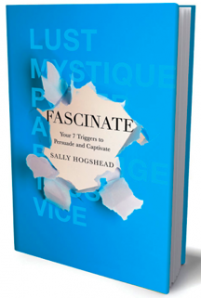
fascinate1Okay . . . guarantee is a strong word.

Encourage might be better, maybe stimulate. Jump start?

But it doesn’t really matter what word we decide on.

I think using some of the ideas that Sally Hogshead pushes can help increase the chances for grabbing and keeping the attention of our kids.

Sally wrote a book called Fascinate: Your 7 Triggers to Persuasion and Captivation that came out several years ago. What she talks about in the book are the powerful strategies that are used to influence thinking and decision making. Fascinate is targeted at marketers and ad folks but the ideas seem to be exactly what stressed-out teachers are looking for.

Economists have always said that to get people to do something, you have to provide incentives.

So . . . imagine a middle school teacher trying to elicit engagement and excitement about the Compromise of 1850 with 13 year-olds. What to do? Sally has some suggestions . . . seven to be exact. She calls them triggers. A trigger is “a deeply-rooted means of arousing intense interest.”

Sally says it just a matter of picking, choosing and combining the right triggers and your kids will be eating out of your hand.

So what do these triggers look like? Continue reading 7 triggers that guarantee student engagement →

8 sweet graphic organizers for primary sources

primary-source newspaperDeb Brown, a good friend from the Shawnee Mission, Kansas district, shared a statement with me several years ago and it’s rattled around in my head ever since.

“Primary sources belong to everyone. Not just the smart kids.”

I like that.

Something else she said caught my attention.

“Kids should read like a detective and write like an investigative reporter.”

With the new Kansas state standards in full force and the NCSS C3 document just out, this sort of thinking needs to part of every teacher’s world view.

Around the same time, Deb shared some of the things that teachers in her district were using to help kids make sense of all sorts of historical evidence. They fit perfectly into the first C of the 4C’s framework I’m developing for social studies teachers:

  • Collect
  • Collaborate
  • Create
  • Communicate

And using graphic organizers help meet Common Core literacy standards. So I’ve borrowed what she shared and put them together with a few other things to come up with a list of eight highly effective strategies. Together, they provide students with a variety of powerful data collection tools that they can use as they work to solve problems. Continue reading 8 sweet graphic organizers for primary sources →

Test drive the C4 Framework – Win a prize!

C4-logoAfter years of sitting on the margins of instructional practice, social studies is getting a makeover. The Common Core is calling for the teaching of literacy through the integration of fiction and non-fiction into our instruction. In August 2013, the National Council for the Social Studies published the complementary College, Career, and Civic Life Framework for Social Studies State Standards.

Both the Common Core and College, Career, and Civic Life standards support a different approach to teaching and learning social studies than what we saw as part of No Child Left Behind. Instead of focusing on memorizing specific content measured by multiple choice tests, students are now being asked to do social studies – to think historically, to solve problems, to read, write, and communicate. As teachers, we are being asked to find a balance between foundational knowledge and the authentic use of that knowledge.

But it can be difficult. What does that balance look like in actual practice? Continue reading Test drive the C4 Framework – Win a prize! →

Using a pie to teach historical thinking

Okay. Not an actual pie. Though that would be awesome!

But I did learn this very easy but very cool Pie Chart strategy from Nathan McAlister, 2010 Gilder Lehrman Teacher of the Year. It’s a great hook activity that’s awesome for either starting a conversation about a specific topic or as an assessment at the end of learning.

To use as a hook activity: Continue reading Using a pie to teach historical thinking →

Trading Cards, ReadWriteThink, and the Common Core

trading card 1We’ve always asked our kids to read. Informational text. Primary sources. Non-fiction. Fiction. Poetry. We’ve always asked our kids to write. Summaries. Research. Reviews. Reaction papers.

At least, that’s been the theory. Good social studies and history instruction has always included these things but I think that sometimes we can forget how critical reading and writing skills are to what we do. The Common Core, for better or worse, has been a good reminder for us. We need to have our kids read, write, and communicate much more.

The problem for many of us?

Uh . . . what does that look like again?

Continue reading Trading Cards, ReadWriteThink, and the Common Core →