Tag Archives: instructional strategies

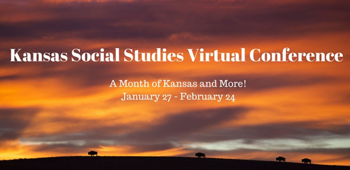
2022 Kansas Social Studies Conference (Did I mention it’s free?)

As a member and current president of the Kansas Council for Social Studies, the working relationship between the professional Social Studies organizations in Kansas is one that I deeply cherish and am proud to be a part of. This network of professionals has helped transform my teaching practice and feeds my teacher soul.

The four groups dedicated to serving the teachers of Kansas are:

  • Kansas Council for History Education
  • Kansas Geography Alliance 
  • Kansas Council for Economic Education
  • Kansas Council for Social Studies 

The cool thing is that while we all have a specific area of focus, we all have one common goal – sharing our love of history, government, and economics with the teachers, students, and communities of Kansas. One way we do that is to co-host a yearly social studies conference. And we were all desperately hoping to be able to provide an in-person conference this year. 

Unfortunately that just isn’t possible yet. (Curse you Omicron.) So the members of the four groups rose to the challenge and have come together to provide a free online learning conference that will meet the needs of teachers just like you.

The bonus? Anyone can attend! Not a Kansas social studies teacher? We’d love to have you be part of the experience! 

So whether you’re wanting to dive deeper into learning about indigenous Identity with Dr. Brandon Haddock, explore geography through the lens of a zombie apocalypse, dive into economic policy, or attend a wide variety of other breakout sessions with teaching strategies to help you “take it up a notch,”  we’ve got something for you. 

And . . . just a reminder. It’s free! 

Here’s the breakdown. Things kick off today and continue for the next month with a series of workshops and sessions – all offered online. (Did I mention they’re all free?)

Getting signed up for any or all of these virtual sessions is super easy. Sign up for one, or all, depending on your schedule and desire. You’ll receive a Zoom link prior to each session. Easy peasy.

I’m planning to attend as many sessions as I can and look forward to meeting all of you. I’m especially excited about my own session on February 16th! I will be sharing the evening with Essdack consultant and KCSS past president Glenn Wiebe, current KCSS vice president TJ Warsnak, high school social studies rock star Derek Schutte, and Institute for Curriculum Services Consultant Erika Lowery. 

I”ll be talking about ways to facilitate classroom discussions around contemporary issues and am looking forward to sharing some awesome strategies! Glenn, TJ, Derek, and Erika will make it tough for you to choose with three other awesome sessions! Feel free to bounce around from session to session. (We’ll be sure to include all of the resources here at Doing Social Studies and on our KCSS website so you’re guaranteed to have access to all the resources!)

  • Using Online Geo Tools to Enhance Your Instruction and Make Your Kids Smarter
    Glenn Wiebe
  • 3 Guys and a Textbook: A Lighthearted Look At Increasing Engagement (for mature audiences only!)
    TJ Warsnak and Derek Schutte 
  • Exploring Strategies for Analyzing Primary Sources
    Erika Lowery

Don’t forget to register! (And don’t forget the free part!). 

Hope to see you there!

Jill Weber
Classroom Based Assessments – Where to start

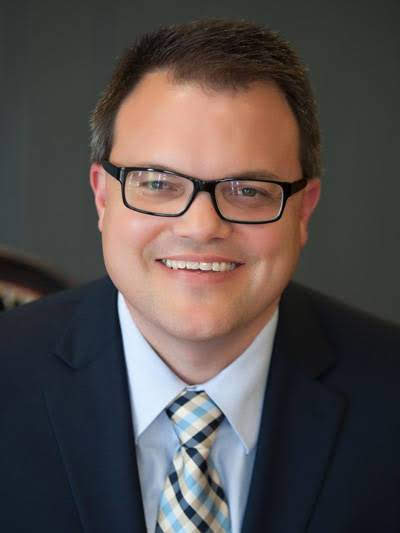
As we reboot Doing Social Studies, we’d love to introduce you to this month’s author, Nathan McAlister.

Nathan McAlister is the Humanities Program Manager – History, Government, and Social Studies with the Kansas State Department of Education. Prior to taking his current position Nathan taught middle and high school social studies for 24 years. Nathan’s past students have created and led several civic and historical preservation projects. These include three pieces of Kansas Legislation, a Civil War mural, a Civil War Veterans Kansas preservation project, many National History Day projects, and four award-winning Lowell Milken for Unsung Heroes projects.

In 2010, Nathan was named Kansas and National History Teacher of the Year by the Gilder Lehrman Institute for American History. Nathan has also been named a Gilder Lehrman Institute of American History, Master Teacher Fellow, Lowell Milken Center for Unsung Heroes, Fellow, and a George Washington Library, Lifeguard Teacher Fellow.  


So, you need to design a CBA? You have an idea, check. You have an outcome the students need to meet, check. You even have the work days mapped and planned, check. But where do I find the necessary materials to either curate the sources myself or send the students to curate sources themselves? Additionally, if I am curating the sources can I use excerpts? Still further, if I use excerpts, how much is too much to cut? My goal, for this blog post is twofold. One, offer examples of websites to use in your classroom, and two, provide a few rules to guide your excerpting of documents.

Let’s get started.

Continue reading Classroom Based Assessments – Where to start →

Using dialogue poems to compare, contrast, highlight perspective

montana-hsMartha Kohl works at the Montana Historical Society as an Education Specialist and publishes an awesome site with great teaching ideas called Teaching Montana History. Like most blogs that focus on state or local history, you can always find strategies and ideas that can cross over to other content and areas.

A recent Martha article titled “Writing Dialogue Poems to Compare Points of View” is like that. The idea of using poetry to connect emotion with content can be powerful and something social studies teachers should try more often. In her article, Martha shares an idea that she read over at Tarr’s Toolbox. And it is such a great idea, we asked to cross-post it here. Thanks, both Martha and Russel – you guys rock! Continue reading Using dialogue poems to compare, contrast, highlight perspective →

Black History 365

Cross-post by Glenn Wiebe from his site, History Tech.

———

The beauty of studying history is that you can never learn it all. There’s always something new to discover. A fresh piece of evidence. Another interpretation. A person or event or idea that has always been there . . . just waiting to be uncovered.

Maybe it’s a small discovery that changes how you personally understand the world. This week I learned that Paul Revere was an amateur dentist. (And if you’re like me, there’s now an image in your head of Revere on a horse – “The cavities are coming! The cavities are coming!”)

Not earth-shattering. But still cool.

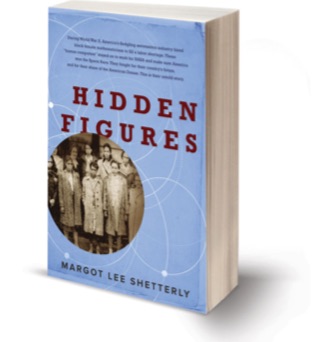
hiddenfigures2And then there are those people and events that are just a bit bigger and should change how we all see the world. The movie and book Hidden Figures are like that.

Seriously? How did that slip by?

African American women calculating aeronautical and astronomical math, helping push the United States into space? In the Jim Crow South? Now that’s cool. And powerful. And part of the American story. But up until the last few years, the story of people like Katherine G. Johnson, Dorothy Vaughan, and Mary Jackson was relatively unknown and certainly not mentioned in any of the history classes I ever took.

Which brings us to February.

And Black History Month.

I’m always a bit conflicted about the idea. The concept of a month specifically set aside for the study of Black History started back in 1926 when historian Carter G. Woodson and the Association for the Study of Negro Life and History announced the second week of February to be “Negro History Week.” That particular week was chosen because it marked the birthday of both Abraham Lincoln and Frederick Douglass.

In 1976, the federal government followed the lead of the Black United Students at Kent State and established the entire month as Black History Month. President Ford urged Americans, and especially teachers and schools, to “seize the opportunity to honor the too-often neglected accomplishments of black Americans in every area of endeavor throughout our history.”

The hope was that Black History Month would provide a very intentional time for all of us to remember together the struggles of African Americans to obtain the basic civil rights afforded to others, the challenges African Americans have faced for centuries, and the contributions of African Americans to who we are. But . . . the real hope was Continue reading Black History 365 →

Russel Tarr & A History Teaching Toolbox

(Cross-posted from History Tech.)

Part of what I get to do is spend time browsing the Interwebs finding tools and resources that would be useful for history and social studies teachers. Sometimes I find new stuff like the very cool Smithsonian Learning Labs and sometimes I just keep going back to the classics.

Russel Tarr is one of the classics. His Active History site (along with his ClassTools and Tarr’s Toolbox) always has some new strategy or tool that I haven’t seen and it’s always something useful. I’m really not sure how he finds time to actually teach but he’s been doing this for almost twenty years.

He has a degree in Modern World History from Lady Margaret Hall, Oxford University and is currently Head of History at the International School of Toulouse, France. On his free time, he delivers training courses to history teachers in the UK and Europe, writes regularly for the national and international press on historical and educational issues, and is a prominent figure in the educational community on Twitter – where he is one the most followed history teachers in the world.

All of this to say that he knows what he’s talking about. And it just got better. Continue reading Russel Tarr & A History Teaching Toolbox →