Category Archives: primary sources

Classroom Based Assessments – Where to start

As we reboot Doing Social Studies, we’d love to introduce you to this month’s author, Nathan McAlister.

Nathan McAlister is the Humanities Program Manager – History, Government, and Social Studies with the Kansas State Department of Education. Prior to taking his current position Nathan taught middle and high school social studies for 24 years. Nathan’s past students have created and led several civic and historical preservation projects. These include three pieces of Kansas Legislation, a Civil War mural, a Civil War Veterans Kansas preservation project, many National History Day projects, and four award-winning Lowell Milken for Unsung Heroes projects.

In 2010, Nathan was named Kansas and National History Teacher of the Year by the Gilder Lehrman Institute for American History. Nathan has also been named a Gilder Lehrman Institute of American History, Master Teacher Fellow, Lowell Milken Center for Unsung Heroes, Fellow, and a George Washington Library, Lifeguard Teacher Fellow.  


So, you need to design a CBA? You have an idea, check. You have an outcome the students need to meet, check. You even have the work days mapped and planned, check. But where do I find the necessary materials to either curate the sources myself or send the students to curate sources themselves? Additionally, if I am curating the sources can I use excerpts? Still further, if I use excerpts, how much is too much to cut? My goal, for this blog post is twofold. One, offer examples of websites to use in your classroom, and two, provide a few rules to guide your excerpting of documents.

Let’s get started.

Continue reading Classroom Based Assessments – Where to start →
Old or new, maps are cool. Two new ones you need to explore

Can you ever have too many maps?

The obvious answer is no. You can never have too many maps.

So when I ran across some very cool old maps last Saturday at the Wichita Flea Market, there really wasn’t any question about whether or not I would buy them. The question was how many will I buy.

I settled on two. Which means my wife helped me decide that I should settle on two. There are quite a few maps already in my house and I was gently made aware of that fact. Which means semi-gently.

Both of the maps I walked away with are almost 100 years old. One is a 1924 map of tourist Rome published in Italian, the other a map highlighting the 1924 British Empire Exhibition with suggested mass transit options from around the London metro area. So cool.

Perfect for displaying, reading, primary source analysis, (the Empire Exhibition and its various colonial pavilions is just asking for some in-depth conversation) or just wafting in the 100 year old smell.

But while we all know how cool old maps are, new maps are nothing to sneeze at. I love the ability of digitized maps to allow access to all sorts of data in all sorts of very visual ways. Take a look at these two Continue reading Old or new, maps are cool. Two new ones you need to explore →

State of the Social Studies

TomClairAbeThis week’s post comes from Thomas Fulbright, current KCSS president and history teacher at Hope Street Academy, a public charter school in Topeka since 2008. Thomas intends “to spend my entire life convincing them how exciting and important history is.”  His bio picture is daughter Claire and Thomas  meeting President Lincoln.
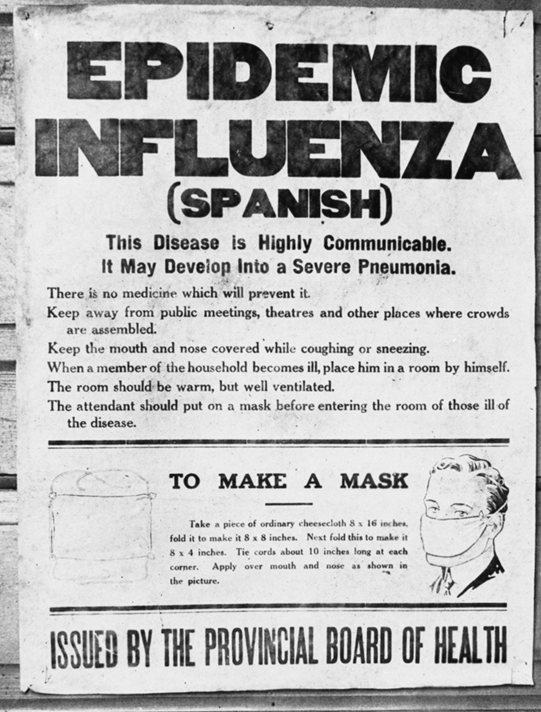

This past July, I attended a Library of Congress Primary Source SummitTF NameTag hosted by the Minnesota Council for the Social Studies.  We covered a number of topics beyond just social studies pedagogy with a focus on the use of primary sources. By the end of the summit I was feeling good about the State of the Social Studies in Kansas, and in addition, reinvigorated in my personal purpose for teaching social studies.  Let me tell you why & hopefully you will feel the same way (sorry you couldn’t come with me to Minnesota).

First – the State of the Social Studies. Continue reading State of the Social Studies →

Need a super simple assessment tool? Make a pie.

Several weeks ago, I had the chance to work with a group of high school teachers as we brainstormed new Inquiry Design Models.  Any time I get the chance to spend time with a bunch of other social studies teachers, not much can ruin the day. Seriously . . . a whole day talking, sharing, playing with, and exploring the best social studies tools, resources, and strategies?

And during our time together we messed around with a tool that I had almost forgotten about.

The Pie Chart.

The Pie Chart is a powerful graphic organizer / writing scaffold / assessment tool / Swiss army knife. It does it all and is drop dead simple. I first learned about the Pie almost a decade ago from social studies super star Nathan McAlister.

Nate was part of our Teaching American History grant as the summer seminar master teacher and used the Pie Chart as a hook activity to kick start a conversation about the causes of the Civil War.

Steps he took: Continue reading Need a super simple assessment tool? Make a pie. →