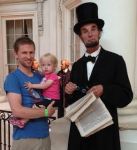
 This week’s post comes from Thomas Fulbright, current KCSS president and history teacher at Hope Street Academy, a public charter school in Topeka since 2008. Thomas intends “to spend my entire life convincing them how exciting and important history is.” His bio picture is daughter Claire and Thomas meeting President Lincoln.
In my last blog post, I shared with you a description of my pedagogical approach and provided an example. A quick refresher – at the start of the semester, students identify the purpose of learning history, (summary: they agree with George Santayana) then throughout the semester they do comparisons between policy debates of the past and policy debates happening today.
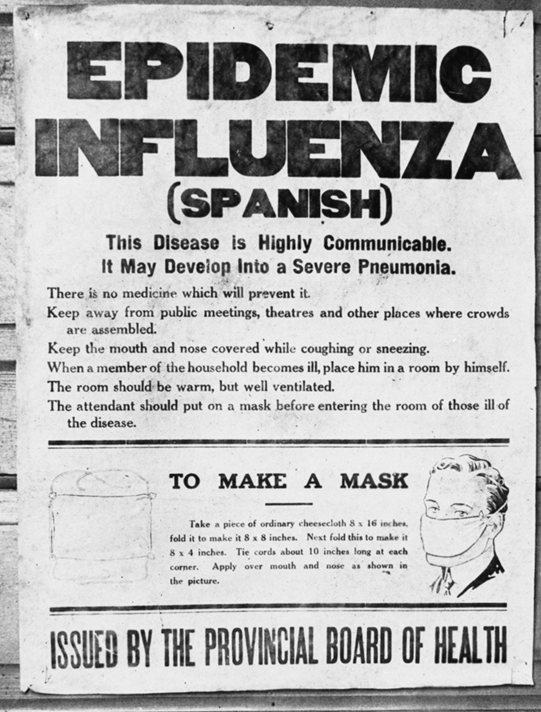 While some of these lessons are pretty easy to modify from semester to semester (there will always be debates over immigration, the connections may just be different), sometimes a major event requires the creation of a new lesson. My class spans the eras from Reconstruction through the Great Depression. It just so happens a current event which is drawing my students’ attention has a pretty good connection to the past.
Previously, the Spanish Influenza was part of the larger conversation about the League of Nations’ clause about an international agreement to study and prevent diseases. But the development of the Coronavirus required the creation of a whole new “case study.” What I found during my research to create the lesson drove home the whole purpose of why we teach history and why I teach history the way I do.
The lesson I frantically pieced together over my spring break was intended to be used right after we returned to class. Students were going to study the debate over “closing orders” that were created in response to the spread of the “Spanish Influenza.” They were going to connect those arguments to today’s debate over social distancing and closing orders. Continue reading Those who cannot remember the past are condemned to repeat it.
 Sounds like a lot, doesn’t it? I mean . . . engaged, civil, informed, educated, and competent. That’s a mouthful. And do we seriously need to kids who exhibit ALL of those traits? Can’t we just be happy with educated? I lecture, students take some notes, I grade a quiz. Boom, done. Everybody’s happy,
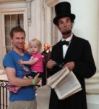 This week’s poster is our very own KCSS President, Thomas Fulbright: I have been teaching history at Hope Street Academy, a public charter school, in Topeka since 2008. My wife and I have three daughters, Claire, Nora, and Meredith. I intend to spend my entire life convincing them how exciting and important history is! My bio picture is of Claire and I meeting President Lincoln!
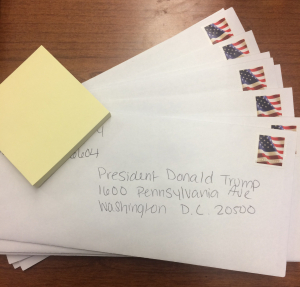 In my last post I discussed teaching history through the use of a simulation of Congress. I gave students a bill from the past, then had them “cast a vote” on the bill by writing an argumentative essay using evidence from the time period (speeches delivered in Congress, newspaper articles, editorial cartoons, etc.) to justify their “vote”. The last part of the process was I had students make a “Contemporary Connection” by reading an NPR article about a similar policy debate being had today in Washington. Students then had to decide if they support or oppose today’s policy. Lastly, they then had to make a comparison to their opinion on the past policy debate with their opinion on the policy debate today. For example; students would have to account for why they had “voted” in favor of H.R.5804 (which became the “Chinese Exclusion Act”), but were then opposed to restrictive immigration policies today?