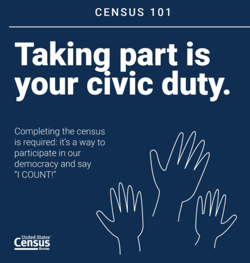
 During yesterday’s fantastic Kansas state social studies conference, I had the chance to talk with Melinda Stanley from the 2020 Census Civic Outreach Effort in the conference Vendor Village. She shared the following information about how teachers and students can get civically engaged with the Census process.
The Kansas State Department of Education in partnership with the U.S. Census Bureau is providing training & support for Kansas educators who sign up to help raise awareness & engage their local community in the 2020 Census.
Shape the future for your students and school. Fall recruitment is now live! Become an ambassador with the U.S. Census Bureau’s Statistics in Schools (SIS) program, which uses Census Bureau statistics to educate pre-K through 12th grade students about the importance of a complete and accurate census count.
SIS equips teachers with free and engaging activities to use in classrooms. For the 2019-2020 school year, these new materials teach students about the importance of the 2020 Census count and empowers them to share this knowledge with adults in their home.
The U.S. Census Bureau looks to Teacher SIS ambassadors to champion the program in their classrooms, schools, and communities, and in doing so promote a complete 2020 Census count. As leaders in the program, ambassadors will:
- Promote national SIS events on social media platforms, leading up to and during events, to increase awareness and engagement.
- Network with fellow ambassadors.
- Receive exclusive 2020 Census promotional items for use in and outside the classroom.
Ideal candidates are active pre-K through 12th grade teachers who are excited to spearhead a national initiative at their schools while shaping the future of their communities through social media, collaboration, and leadership. Application reviewers will consider the following qualifications:
- Past leadership positions or an expressed interest in gaining experience.
- Knowledge of or experience with SIS materials.
- A social media presence.
Making sure all children and families are counted in the 2020 Census is especially important for education. Responses to the 2020 Census survey will determine how more than $675 billion in federal funds is distributed to communities each year for the next 10 years, including money for school programs such as:
- Special education
- Teacher training
- Technology
- School lunch assistance
- Head Start
- Title I funds
- After-school programs
As an SIS ambassador with the U.S. Census Bureau, you will help your students, schools, and communities benefit from the 2020 Census. You and your students can get involved with a two step process:
1. Register with the KSDE to get specific training + student involvement + fun that equals making a difference. Click here to get involved!
2. Register with the U.S. Census Bureau by October 24 via email. ( CLMSO.SISambassador@census.gov) You get national involvement, training, and swag!
If you miss the October 24 deadline, you can STILL register to be part of the Kansas effort!
More Census resources:
 Lori Rice teaches fourth grade at West Elementary in Wamego and is the current Kansas Council for the Social Studies elementary teacher of the year. You can find Lori on Twitter at


 We hope that social studies teachers currently part of the profession, pre-service teachers planning to enter the profession, and vendors passionate about supporting the profession will all join us at Newman University October 20-21 for two exciting days of networking, collaborating, and learning from one another.
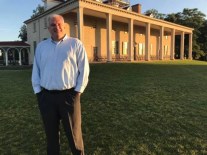
 This week’s poster is our very own KCSS President, Thomas Fulbright: I have been teaching history at Hope Street Academy, a public charter school, in Topeka since 2008. My wife and I have three daughters, Claire, Nora, and Meredith. I intend to spend my entire life convincing them how exciting and important history is! My bio picture is of Claire and I meeting President Lincoln!
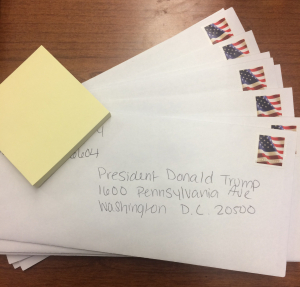 In my last post I discussed teaching history through the use of a simulation of Congress. I gave students a bill from the past, then had them “cast a vote” on the bill by writing an argumentative essay using evidence from the time period (speeches delivered in Congress, newspaper articles, editorial cartoons, etc.) to justify their “vote”. The last part of the process was I had students make a “Contemporary Connection” by reading an NPR article about a similar policy debate being had today in Washington. Students then had to decide if they support or oppose today’s policy. Lastly, they then had to make a comparison to their opinion on the past policy debate with their opinion on the policy debate today. For example; students would have to account for why they had “voted” in favor of H.R.5804 (which became the “Chinese Exclusion Act”), but were then opposed to restrictive immigration policies today?