Category Archives: Glenn Wiebe

Thought bubbles on photos

Several of us were talking a few days ago about different ways to design hook activities that would engage kids while also encourage writing skills.

My favorite is to use thought bubbles on paintings or photos. Thought Bubbles ask kids to imagine what the people in the image are thinking.

Start by finding a photo or painting depicting an event, idea or group of people that helps introduce your content. I used the famous Emmanuel Leutze painting of Washington crossing the Delaware as my starting point.

Continue reading Thought bubbles on photos →

Fact Pyramid / Because Box graphic organizer

I had the privilege of working with 40 middle school social studies teachers last week. It’s the last few days of a three year Teaching American History grant and, yes . . . some teared up a bit towards the end. It’s been a great ride. We’ve all learned a ton – both content and pedagogy.

Last week, we enjoyed the sweetness of working with three history studs –  Mark Fiege, Elliott West, and Thomas Andrews – while also learning more about the best ways to incorporate their history content into actual lessons.

Master Teacher Nathan McAlister walked us through a variety of learning activities including panning for gold, cutting up buffalo, and arguing pros/cons of fracking during a city council meeting.

One of the smaller activities we did was a bit simpler and much easier for you to drop directly into your instruction. So I figured I would share it with all of you. Continue reading Fact Pyramid / Because Box graphic organizer →

Your brain is a bucket full of holes. Sam Wineburg can help

I get the chance to work with all sorts of teachers, across the state and around the country. We’re all different. But when the conversation turns to teaching and learning social studies, I often hear the same thing:

“I have to lecture (or have students read their textbooks out loud, create outlines from the chapter, complete fill-in-the-blank worksheet packets, or watch a 30 year old video converted from 16 mm film) because the kids have to know their facts. It’s not fair asking them to think historically without the basic facts.”

I get it. And I don’t disagree. Kids do need the facts. But I think for too long we’ve just assumed that acquiring foundational knowledge and historical thinking are two distinct and different activities. We fill up their heads with facts and then, if we have time in the school year and after the state assessments are over, then . . . we can try some of that historical thinking stuff.

We need to stop doing that.

The brain is not a basket that we can just fill up with stuff. The brain is a Continue reading Your brain is a bucket full of holes. Sam Wineburg can help →

Library of Congress Primary Source Sets

LOClogoIf you’re a US or World history teacher and are looking for great primary sources, you only have to go as far as the Library of Congress Teacher page. The LOC has so much great stuff, it’s sometimes hard to get out of there.

But I especially love the work the LOC staff has done to create what they call Primary Source Sets. Primary Source Sets are collections of goodies that focus on a particular theme or topic. I’ve added information below for 25 of my favorite sets but be sure to check out the entire list. You also can search the sets by specific state standards.

For each set, you get a downloadable Teacher’s Guide with historical context, instructional suggestions and links to more online resources.  This is exactly the sort of stuff that the newly approved Kansas state standards are asking us to use with our kids. You also get a ton of primary sources and analysis worksheets. It’s a very cool place to find stuff that can engage our students in content and historical thinking.

My favs in alphabetical order: Continue reading Library of Congress Primary Source Sets →

I’d marry a map if it was legal

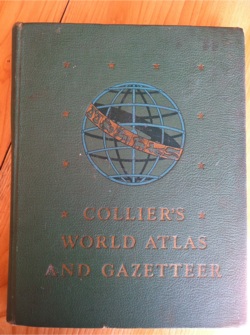
colliers mapI love maps.

Seriously love maps. My latest purchase is a 1941 Collier’s World Atlas and Gazetteer. Three hundred and thirty-five pages of maps, statistics, articles, and geographic data. Sweet.

And really, aren’t maps some of the coolest things that history teachers get to mess with? The answer is yup. But I think we sometimes forget how powerful and useful a map can be. Geography and place often is pushed to the side in our history and social studies instruction. Perhaps is because we just don’t have a strong geography background or we don’t think we have the time / resources to focus on it. But we really don’t have an excuse anymore.

The newly approved  Kansas state social studies standards are focused on five Big Ideas. The fifth one? Continue reading I’d marry a map if it was legal →