
Category Archives: Scott Peavey

“Coach” should not be an insult. Take pride in all aspects of being an educator

coach shortQ:  What is the most common first name of social studies teachers throughout Kansas?
A:  Coach

We all know the old cliche that social studies is the content discipline for those educators who don’t want to teach PE but also don’t want to teach a “real” subject like science or math.  We can imagine their idea of a perfect lesson: assigning students text to read out of the book, followed by a worksheet of basic, low-level questions, and ending with a full-length movie while they plan their next practice. We expect them to play favorites with their specific athletes and put all of their intellectual time and effort into their respective sport.

I’m not convinced the cliche is entirely accurate.

Perhaps I was fortunate during my time at the University of Kansas where my core group of prospective social studies teachers took a relatively strong interest in the content area we were studying.  Some of us were coaches, some of us were not.  Yet nearly all of us were able to engage in thoughtful debate covering a wide range of serious, intellectually stimulating topics.  So I did not really face the coaching cliché until two summers ago. Continue reading “Coach” should not be an insult. Take pride in all aspects of being an educator →
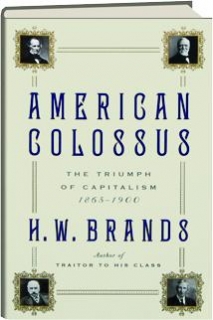
Inspiration from American Colossus Part Two: The Ascendancy Cycle

brands bookIn my previous post I wrote of the inspiration I gained from H.W. Brands’ book American Colossus: The Triumph of Capitalism 1865-1900; specifically how Brands discussion of the dueling natures of capitalism and democracy could lead to a solid classroom discussion in an 11th grade US History course.

This post is regarding another aspect of Brands’ thesis, something that Brands calls the ascendancy cycle in American history.  What follows is far from a polished lesson, but instead the beginnings of an idea that hopefully will result in something beneficial for my students.

In the book, Brands claims that the competition between the forces of pure capitalism and pure democracy can be used to characterize the last 200 years of American history.  This competition has resulted in the proponents of each of these founding principles consolidating power, furthering their beliefs, losing that power to the opposing group as they create policy furthering their agenda, so on and so forth.  I believe that looking at US history through this lens provides students a concrete example of the ebbs and flows of American politics and how these elections can fundamentally alter the course of the nation. Continue reading Inspiration from American Colossus Part Two: The Ascendancy Cycle →