
A couple of months ago, I felt smart. I had just finished a full day with some of the best social studies teachers around. We had talked about hyperdocs, completed a BreakoutEdu, identified photos as either real or fake, learned about a variety of graphic organizers, and participated in an awesome video conference focused on the Smithsonian Learning Lab with Darren Milligan and Kate Harris.
I felt smart. I had learned some stuff. I had taught some stuff. My brain was feeling good.
I should have stopped while I was ahead.
But after learning more about the Learning Lab, I decided to dig in a bit and see what all might be available online from the Smithsonian. And that’s where I got into trouble. About an hour later, I dug my way out of the incredible amount of goodness that Smithsonian folks have made available for educators. I felt smarter but not smarter all at the same time.
Smarter because I learned about some sites and resources that were new to me. Not smarter because . . . seriously, how I have I not known about these things before?
Just so you know, there is a ton of materials, lesson plans, and resources that the Smithsonian has put online. Seriously . . . a ton. Darren told us that the Smithsonian isn’t really sure how much stuff they have – he rounded it up to around 160 million objects. And that’s just the stuff in their collections, not the lesson plans and online exhibitions.
So just to share some of what I learned, here a few places that you need to pencil into your schedule to visit:
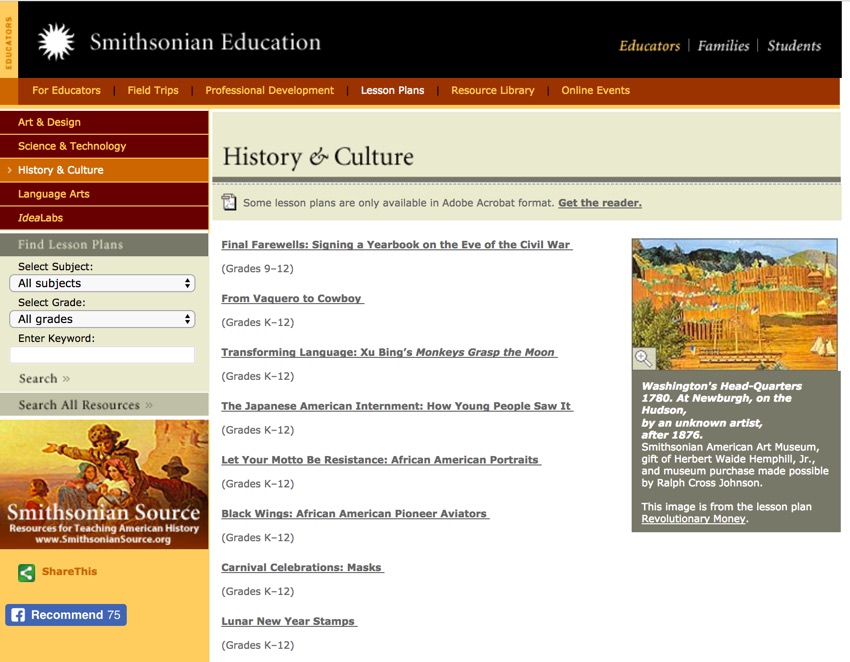
 Start small with the handy Smithsonian Education site that has direct access to hundreds of lesson plans. Be sure to use the filters along the left side to narrow down your search by grade level and subject.
- Then head over to the Smithsonian Source site for primary sources, activities for using primary sources, and DBQs aligned to specific topics. Find all of this stuff by clicking the tabs across the top of the page. Be sure to sign up for their newsletter.
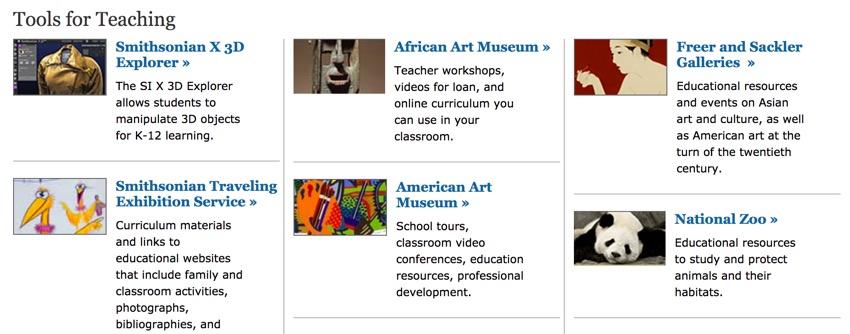
- Go big by stopping in at the general Smithsonian Educators page. Be sure to
 scroll down the page to see the different teaching tools that are available. My favorite? The Smithsonian X 3D Explorer.
 - Check out their Online Resources site. Sort and filter along the left hand side, especially the Resource Type. You will also find some useful things at the Exhibitions page. Unless you plan on actually visiting DC, focus on the virtual exhibitions.
 The Smithsonian Folkways site focuses on music from around the world. Some for pay. Much for free, including an online radio channel. Get access to their teaching tools and lesson plans.
- The Smithsonian Center for Folklife and Cultural Heritage is similar to Folkways. Lots of resources for teachers.
- And if this isn’t enough, just start at their front page, pick a random museum, and go from there.

Yup. Smarter. Thanks Smithsonian.

