All posts by glennw

Unknown's avatar

About glennw

I work as a social studies specialist at ESSDACK, an educational service center in Hutchinson, Kansas. Before coming to ESSDACK, I taught middle school US History and higher ed social science classes.

Black History 365

Cross-post by Glenn Wiebe from his site, History Tech.

———

The beauty of studying history is that you can never learn it all. There’s always something new to discover. A fresh piece of evidence. Another interpretation. A person or event or idea that has always been there . . . just waiting to be uncovered.

Maybe it’s a small discovery that changes how you personally understand the world. This week I learned that Paul Revere was an amateur dentist. (And if you’re like me, there’s now an image in your head of Revere on a horse – “The cavities are coming! The cavities are coming!”)

Not earth-shattering. But still cool.
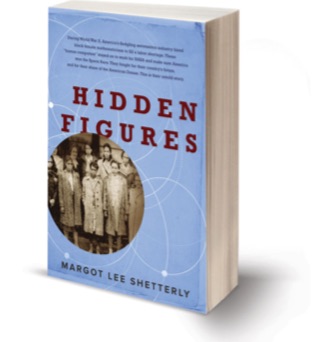
hiddenfigures2And then there are those people and events that are just a bit bigger and should change how we all see the world. The movie and book Hidden Figures are like that.

Seriously? How did that slip by?

African American women calculating aeronautical and astronomical math, helping push the United States into space? In the Jim Crow South? Now that’s cool. And powerful. And part of the American story. But up until the last few years, the story of people like Katherine G. Johnson, Dorothy Vaughan, and Mary Jackson was relatively unknown and certainly not mentioned in any of the history classes I ever took.

Which brings us to February.

And Black History Month.

I’m always a bit conflicted about the idea. The concept of a month specifically set aside for the study of Black History started back in 1926 when historian Carter G. Woodson and the Association for the Study of Negro Life and History announced the second week of February to be “Negro History Week.” That particular week was chosen because it marked the birthday of both Abraham Lincoln and Frederick Douglass.

In 1976, the federal government followed the lead of the Black United Students at Kent State and established the entire month as Black History Month. President Ford urged Americans, and especially teachers and schools, to “seize the opportunity to honor the too-often neglected accomplishments of black Americans in every area of endeavor throughout our history.”

The hope was that Black History Month would provide a very intentional time for all of us to remember together the struggles of African Americans to obtain the basic civil rights afforded to others, the challenges African Americans have faced for centuries, and the contributions of African Americans to who we are. But . . . the real hope was Continue reading Black History 365 →

Zoom In to history

jill weberJill Weber, 2016 Gilder Lehrman Kansas History Teacher of the Year and teacher at Cheney Middle School, joined the Doing Social Studies writing team last year. The following is a cross-post from her site A View of the Web.

——–

About 3 years ago I was first introduced to a new web program called Zoom In.  They were financed by the Bill and Linda Gates Foundation and were trying to create an online platform to help students use historical thinking skills, and help teachers learn how to best instruct these skills.  Because, let’s face it.  Most of us were NOT taught this way, and most of us were not instructed on HOW to teach this way.

For me it was love at first sight.

And then I got the bad news.  The program wasn’t completely iPad friendly, and we are 1:1 iPads.

But I was too much in love with this idea to just let it go.  So I did what I do best . . . Continue reading Zoom In to history →

Argumentative writing prompts, scaffolded tasks, and using evidence

citation-neededWe want our students to grapple more with content, to think historically, and solve problems. One of the ways we can support this behavior is by asking our kids to think and write to support a claim using evidence.

Here in the great state of Kansas University basketball, our standards and assessment use the term “argumentative writing” to describe the process of supporting claims with evidence. That phrase can sound a little too much like some of last  year’s presidential debates or this month’s childish Twitter wars but . . . asking kids to create an argument and to support that argument really is a good thing. We want them to be able to look at a problem, gather and organize evidence, and use that evidence to create a well-supported argument.

As many of us move from a content focused instructional model to one that instead asks students to use that content in authentic ways, it can sometimes be difficult knowing how to actually have them write argumentatively. But there are resources available to help with your lesson design.

We’ve gone back to an earlier post from our partner blog History Tech to cherry pick some of our favorites. Pick and choose the ones that work best for you. Continue reading Argumentative writing prompts, scaffolded tasks, and using evidence →

Who’s your “most famous American?”

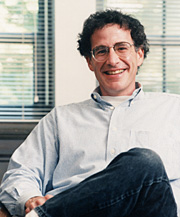
wineburgIf you ‘ve had a chance to spend any amount of time with me, you know what I think of historian and author Sam Wineburg.

Class?

That’s right. He’s a stud.

And I recently ran across some work he did several years ago that I think is interesting. Sam and colleague Chauncey Monte-Sano interviewed 4,000 people – half of whom were juniors and seniors in high school and the other half over the age of 45. It was a very simple survey. Wineburg asked each participant to list ten names in response to one question:

Who are the most famous Americans in history, excluding presidents and first ladies?

Feel free to post your answer below in the comments. We’ll wait.

You back?

In today’s “fragmented society,” one might expect two very different lists – one consisting of rap stars and actors and the other listing a few of the Founding Fathers, Edison, and perhaps Helen Keller. What the two researchers discovered was something very different. Continue reading Who’s your “most famous American?” →