Category Archives: standards

Literally #FindYourPark with free maps!

nps park mapOn August 26, the National Park Service celebrated its 100th anniversary and as one part of the celebration, we’re asking you to “Find Your Park”. The NPS now has over 400 sites across the nation that offer something for everyone. If you like mountains, the beach, or history, we’ve got a site for you.

There are more than 84 million acres across the U.S., at sites as diverse as national monuments, Civil War battlefields, and historic sites. There’s a big range in size among NPS sites, too: The biggest is Wrangell-St. Elias National Park and Preserve in Alaska, at 13.2 million acres, while the smallest is Thaddeus Kosciuszko National Memorial in Pennsylvania, at 0.02 acre. These sites attract more than 300 million visitors every year.

Shelton Johnson, a park ranger at Yosemite National Park and published author, shared his thoughts on this important milestone: Continue reading Literally #FindYourPark with free maps! →

H.I.T. Notebooks: A Different take on Interactive Notebooks

jill weberJill Weber, 2016 Gilder Lehrman Kansas History Teacher of the Year, has joined the Doing Social Studies writing team and will be posting throughout the year. The following is a cross-post from her excellent site A View of the Web.


I used Interactive Notebooks in my social studies class for eight years.  The majority of the students loved them.  But I had a serious love/hate relationship with them.  And after taking a long look at the pros and cons of the books and my current curriculum, I decided not to continue with the interactive notebooks last year.

While I found it a relief not having to keep up with the grading of 60+ notebooks, there was something missing from my class.  I had a number of kids ask me why we weren’t doing them anymore, and others who were disappointed that the “hands on” cutting, pasting, and creativity was replaced with more writing assignments.  I felt guilty that my answer was “because I just couldn’t keep up with all the grading.”

That got me thinking on ways that I could bring the interactive notebooks idea back without having all the copious grading that went with it.  I talked with our language arts teacher, who uses her interactive notebooks as a tool to help organize materials and doesn’t grade it at all.  I liked that idea.

But I wanted more.  I wanted a way to hold kids accountable.  I wanted them to take pride in the organization and appearance of the book.  And, most of all, I wanted it to be used as something more than a storage device.  I want it to be something they will reference throughout the year.

The Idea:
Then an idea started to take form.  An idea to use the notebook more like a detective’s note book when trying to solve a crime.

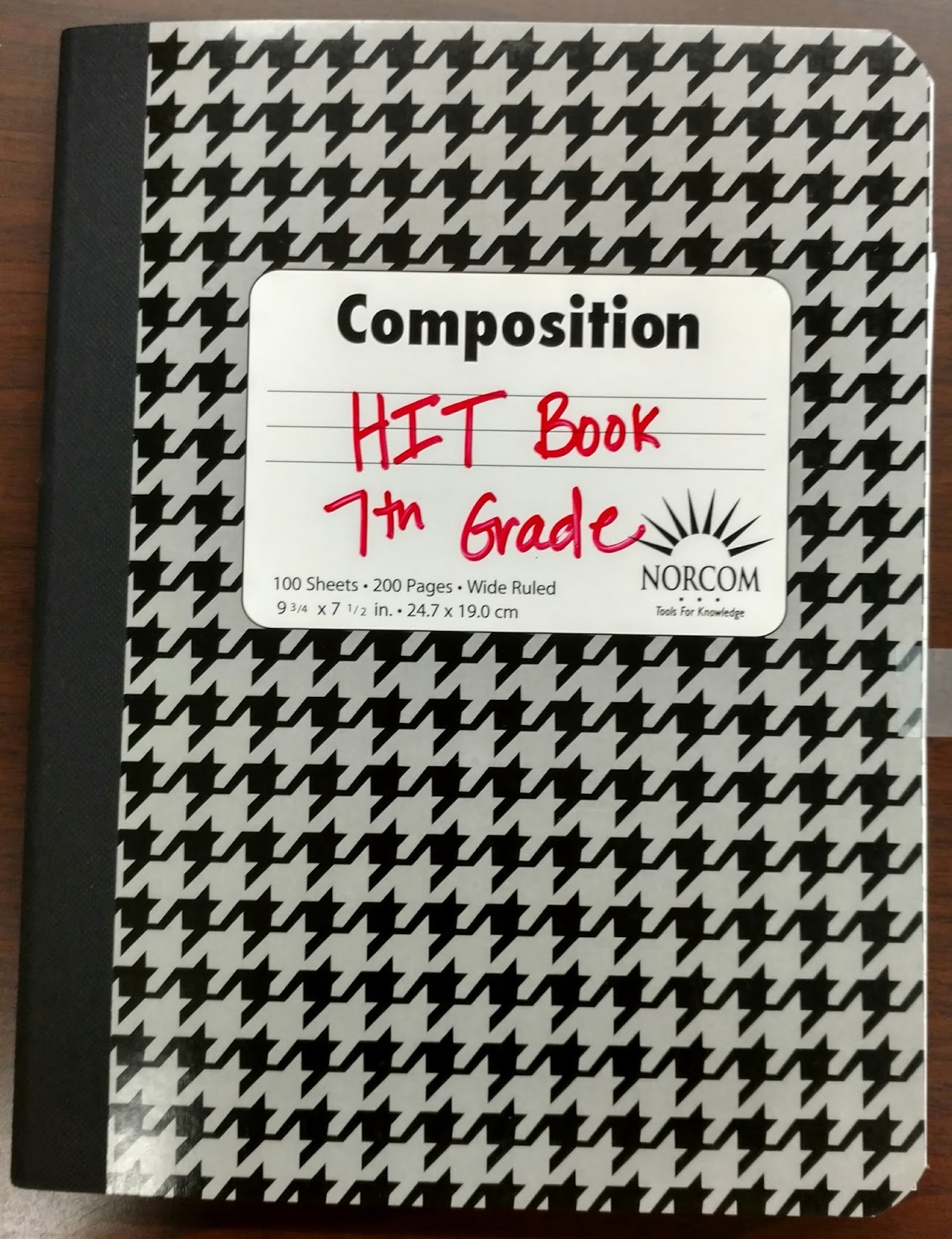
So this year, we have: the  Historian In Training Notebook or HIT books. (HIT is a cool name for a middle school activity, right? )

The HIT notebook will be designed as sort of a history detective notebook that we’ll use to identify historical thinking techniques, analyze primary sources, keep information over specific historical questions, and refer back to skills learned throughout the year.

A few examples of possible pages  . . .  Continue reading H.I.T. Notebooks: A Different take on Interactive Notebooks →

Kansas Social Studies Conference

Conference Logo

The 2015 Kansas Social Studies Conference began with an opening assembly hosted by Don Gifford and Suzy Myers from the Kansas Department of Education  to fit with the theme of Integrating History and ELA.  Don started his presentation by introducing us to his self proclaimed “man crush” Alexander Hamilton.

Don suggested that “Hamilton wrote himself out of poverty and into the history books.” He continued by suggesting that we need to encourage reading and writing skills in our classrooms. Suzy then asked us to consider what prevents us from making literacy, especially writing,  a central activity in our daily lessons.  Research shows that colleges and employers are able to identify reading and writing deficiencies in the classroom and the job place, so why are we not doing more to prevent this?

As educators we should redefine what we consider writing, use meaningful collaboration between social studies and English teachers, and model for our students the transfer of knowledge between content areas by applying grammar in the social studies classroom and content in the English classroom.

Continue reading Kansas Social Studies Conference →

A Guide to a New Type of Test

I got to know Jill Weber about five years ago when we started our second Teaching American History grant at ESSDACK. And she’s been great about opening up her classroom in a variety of ways including posting ideas and strategies on her blog A View of the Web.

Jill recently shared a post with our study group that she is allowing us to cross-post. Enjoy!

glennw

—————————-

My 7th graders will be taking their first test for me this week.  I thought this would be a good time to talk about what a Social Studies test in Mrs. Weber’s class looks like.

Social Studies has changed.  Teachers should be implementing activities, lessons, and strategies to help students read and analyze primary sources, think critically, and “do” history.  We should be teaching kids how to become historians.  How to question sources, look at conflicting view points, and draw conclusions based on the evidence that is given to us.

But what does that LOOK LIKE?

And what does it look like on a TEST?

I have spent the last three years developing a method for creating unit tests/assessments that involve more analysis and application as opposed to simple regurgitation of facts.

Here’s a taste of what you will and won’t see on one of my tests. 
Continue reading A Guide to a New Type of Test →

8 sweet graphic organizers for primary sources

primary-source newspaperDeb Brown, a good friend from the Shawnee Mission, Kansas district, shared a statement with me several years ago and it’s rattled around in my head ever since.

“Primary sources belong to everyone. Not just the smart kids.”

I like that.

Something else she said caught my attention.

“Kids should read like a detective and write like an investigative reporter.”

With the new Kansas state standards in full force and the NCSS C3 document just out, this sort of thinking needs to part of every teacher’s world view.

Around the same time, Deb shared some of the things that teachers in her district were using to help kids make sense of all sorts of historical evidence. They fit perfectly into the first C of the 4C’s framework I’m developing for social studies teachers:

  • Collect
  • Collaborate
  • Create
  • Communicate

And using graphic organizers help meet Common Core literacy standards. So I’ve borrowed what she shared and put them together with a few other things to come up with a list of eight highly effective strategies. Together, they provide students with a variety of powerful data collection tools that they can use as they work to solve problems. Continue reading 8 sweet graphic organizers for primary sources →