Tag Archives: primary sources

Trans-Atlantic Slave Trade Database

slavery databaseHaving students internalize historical events is a task I try to achieve in my high school Geography and World History classrooms almost every lesson. This is a difficult mission, but it does not prevent me from asking myself, “How can I make this topic personal for students?”

This is the same question I pondered when developing lessons about the Trans-Atlantic Slave Trade. Yes, students arrive to me with prior knowledge about the subject, but their familiarity with the topic is only surface-deep. I have learned that investigating history from the bottom-up has made my students more attuned into the field of history.

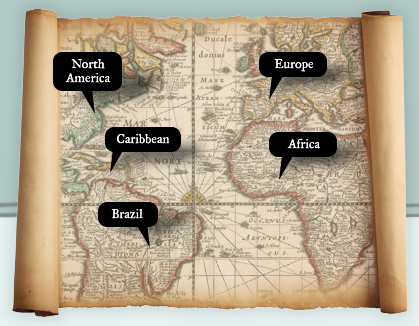
Therefore, the Trans-Atlantic Slave Trade Database has made the grassroots of this theme come alive in my classroom. The immense about of information compiled in this database is astounding and truly makes my students appreciate the subject. There are maps that illustrate where the 12.5 million slaves were embarked and disembarked, but what catches my students’ interest the most is the “African Names Database”, which houses 91,491 names of Africans who were enslaved. Not only are their names provided, but also their age, height, sex, name of the ship they were transported on, and where they were embarked/disembarked.

By clicking on the “Voyage ID” for each African listed, you can even see more information about the ship, such as its tonnage and the name of the captain! This is a treasure-trove of information that makes the Trans-Atlantic Slave Trade relevant to students.

The site even offers lesson-plans for teachers, who may want to know how to incorporate this information into the classroom effectively. The slave-trade may have ended over a century ago, but this database helps students realize the significance of this event.

Newspaper Map – handy geo-based newspaper search tool

As social studies teachers, we’re always looking for great current events resources. And what history teacher doesn’t love old newspapers as primary sources?

Several years ago, I ran across a site that does both. And translates stuff into English for you. And provides a very cool way to visual browse over 10,000 newspaper in map form. And has a mobile version for iPods, iPads and cell phones.

Called newspaper map, the relatively new webapp uses Google Maps to visually display newspapers from almost every country in the world. You can filter the map results by place, address, newspaper name and language. The further you zoom in, the more pins you see. The larger the pin, the larger the paper.

Continue reading Newspaper Map – handy geo-based newspaper search tool →

8 sweet graphic organizers for primary sources

primary-source newspaperDeb Brown, a good friend from the Shawnee Mission, Kansas district, shared a statement with me several years ago and it’s rattled around in my head ever since.

“Primary sources belong to everyone. Not just the smart kids.”

I like that.

Something else she said caught my attention.

“Kids should read like a detective and write like an investigative reporter.”

With the new Kansas state standards in full force and the NCSS C3 document just out, this sort of thinking needs to part of every teacher’s world view.

Around the same time, Deb shared some of the things that teachers in her district were using to help kids make sense of all sorts of historical evidence. They fit perfectly into the first C of the 4C’s framework I’m developing for social studies teachers:

  • Collect
  • Collaborate
  • Create
  • Communicate

And using graphic organizers help meet Common Core literacy standards. So I’ve borrowed what she shared and put them together with a few other things to come up with a list of eight highly effective strategies. Together, they provide students with a variety of powerful data collection tools that they can use as they work to solve problems. Continue reading 8 sweet graphic organizers for primary sources →

Some sweet sites for historical thinking

The new buzz word in social studies instruction?

Historical thinking.

Okay. Yes. It’s two words but it’s still pretty buzzy. The idea of historical thinking has been hanging around as part of social studies instruction for a long time. But it’s sort of been like that weird second cousin who shows up at family reunions that no one really talks to. We haven’t been paying much attention to it.

But with new state standards and Common Core literacy stuff, not to mention the new College,Career, and Civic Life standards, historical thinking is back where it really belongs. As the central part of everything we do. And because it’s been at the weird second cousin status for so long, many teachers don’t have a ton of historical thinking resources.

So today . . . three sweet web sites that provide primary source raw data and lesson plans / resources that support historical thinking skills. Continue reading Some sweet sites for historical thinking →

Analysis worksheets, evidence, and primary documents

loc analysis worksheetThere’s a cool buzz running through the history education world.

Primary sources. Documents. Using evidence. Solving problems. Historical thinking. And that’s a good thing. But I know that it can be difficult sometimes trying to figure out how to use primary sources.

First piece of advice?

Don’t worry so much about primary vs. secondary sources. Start thinking about evidence, about data, instead of focusing just on one sort of document over another. Because if we’re asking great questions, kids will be using all sorts of documents and sources to solve the problem.

Second piece of advice?

Don’t re-invent the wheel. Have kids use the different tools already out there as they work to make sense of documents. As we train our kids to think historically, these sorts of analysis worksheets can be great scaffolding tools, especially with  elementary and middle school students.

Some of the best Continue reading Analysis worksheets, evidence, and primary documents →