Tag Archives: primary sources

MBQs – Using Media Based Questions to support historical thinking

reece-1I was having a conversation with my two twenty-something children a few weeks ago and referenced an old Reese’s Peanut Butter Cup commercial. You know the one.

The one where two people, one eating peanut butter and the other chocolate, bump into each other? The one where they’re both heading headphones, listening to their Sony Walkmans, and don’t see each other until it’s too late.

“Hey! You got peanut butter on my chocolate.” “Hey! You got chocolate in my peanut butter.”

Yeah. My kids obviously didn’t remember either. It’s an ancient ad but I think of it often when we’re talking about app mashups and tweaking tech tools to do things they’re not really designed to do. Cause chocolate and peanut butter is as delicious together as is iMovie and Tellagami.

I shared the Reece’s reference with my kids because earlier in the day I had spent some time talking Google tools with a group of tech integration coaches. Part of that time was spent exploring the possibilities of mashing up Google My Maps and Forms. And over the last few days, my brain has been going back to different things that we could be doing with Google Forms.

So.

I love document based questions. I love the Stanford History Education Group’s Beyond the Bubble mini-assessment tool. And we know that I love the Google.

The mashup? Continue reading MBQs – Using Media Based Questions to support historical thinking →

6 C’s for analyzing primary sources

history project logo

Over the last few years, we’ve seen the instructional strategy pendulum swing over to encouraging more use of evidence by students to solve authentic problems. And there’s tons of stuff out there to help us and students make sense of primary and secondary sources.

You’ve got the Library of Congress primary source analysis worksheets. You’ve got the awesome stuff bySam Wineburg and Stanford. There’s the DocsTeach site by the National Archives as well as all of their document analysis lessons / worksheets. And lots of things like Historical Thinking Matters and Historical Scene Investigation.

But a lot of people don’t seem to be aware of the excellent work that the History Project at the University of California, Irvine does with helping student evaluate evidence. We have been perhaps overloaded with Wineburg’s stuff so much that we don’t think that we need to go out and look for other types of tools.

Don’t get me wrong, Sam. I absolutely love your stuff. Sourcing, contextulization, corroborating. I am all in. But we always said that it’s okay to date other people. And the History Project has some useful stuff.

I especially like their 6 C’s of Primary Source Analysis graphic organizer. Continue reading 6 C’s for analyzing primary sources →

4 reasons for not using primary sources (And 27 strategies for eliminating those reasons)

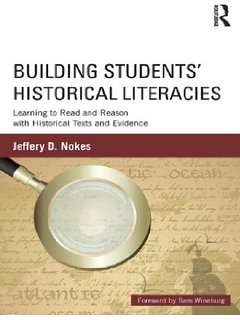
nokes book

I’ve cross-posted this article from History Tech because the article discussed below is just that useful. So . . . if you’ve already seen this, head back to the article and keep reading!

——–

As the discipline continues to shift its practice towards asking kids to solve problems using evidence and encouraging the development of historical thinking skills, more and more social studies teachers are integrating the use of primary sources into their instructional designs. Several days ago, I posted a quick overview that highlighted 10 things to think about while using primary sources.

And if you’ve been reading History Tech for any amount of time, you know that I love the use of evidence – especially the use of primary sources.

But what if we’re wrong?

What if using primary sources is so difficult that many of our students just aren’t able to do it? Could we just be wasting a bunch of time that would be better used with direct instruction? Continue reading 4 reasons for not using primary sources (And 27 strategies for eliminating those reasons) →

Stop! In the Name of…Writing?

stoplight2In an effort to improve the writing skills of my students and better prepare them for the Kansas Writing Assessment, the Multidisciplinary Performance Task, I have begun implementing the Stoplight Writing strategy.  I attempted to use this strategy in my classroom last year, but as a last ditch effort before the test rather than a regular activity the students experienced throughout the entire school year.

This year however, my students are writing every unit using stoplight writing, and the dramatic difference in the finished products from last year to this year are extraordinary.  Last year I feared that my 7th grade students didn’t know how to write a complete sentence, this year I am finding that my expectations for the students are too low and every unit I raise the standards for their finished work. Continue reading Stop! In the Name of…Writing? →

Pre-Service Teachers Contribute Curriculum

Pre-Service teachers are getting into the game and classroom teachers can benefit. The HGSS undergraduates at KU have a thriving student chapter of the National Council for the Social Studies  – the Kansas University Council for the Social Studies (KUCSS) – and they’ve been using their powers for good.

KUCSS has partnered with the Robert J. Dole Institute of Politics in Lawrence, Kansas to create instructional materials for middle and high school social studies teachers. The Dole Institute of Politics has launched an online exhibit commemorating Dole and his service in WWII which resulted in a debilitating injury that would later largely shape his work as a Senator resulting in the Americans with Disabilities Act (1995).

If you’d like to read more about the collection and their collaboration with KUCSS you can check out the full article here.

Make sure to check out the WWII Letter Collection from the Dole Institute and follow the In the Classroom link for the lesson plan.

And if you haven’t taken the opportunity to visit the Dole Institute of Politics in Lawrence it’s well worth a trip. Heck, make an I-70 road trip of it: start at the Eisenhower Presidential Center in Abilene, hit the Dole Institute, and then on to Liberty, Missouri for the Truman Presidential Library and Museum – just imagine all the government fun!