I work as a social studies specialist at ESSDACK, an educational service center in Hutchinson, Kansas. Before coming to ESSDACK, I taught middle school US History and higher ed social science classes.
View all posts by glennw →
I recently ran into a guy named Michael following a session at a social studies conference. Michael teaches history in a large, urban high school with a ton of low SES and ELL kids. His situation seemed so desperate to me that I had to ask him what strategies he used to convey content and meaning, how he got kids to makes sense of historical information.
He began sharing some of ideas and I realized that his situation wasn’t desperate. The kids in his classes – the low SES kids, the ELL kids – are learning and they’re learning at high levels. And it’s because of Michael.
I’ve read the ton of research out there documenting the importance of quality teachers. But it was fun to actually sit down and talk with someone who knows the content, who understands what works, and spends time honing his craft. To talk with someone whose actions suggest that the research is right.
We all love the Stanford History Education Group. What’s not to like? You get incredible lessons aligned to the NCSS C3 standards. And for us Kansas folks, they aligned perfectly to our state standards. They great for training kids to use evidence, think historically, and develop arguments with evidence.
You get powerful assessments that they call HATs – historical assessments of thinking. Short and sweet, easy to use, summative and formative assessments that help you measure a student’s ability to use evidence, think historically, and develop arguments with evidence.
Yup. The two go hand in glove. Tools for teaching and tools for assessing social studies process skills.
And if you’re not using these two free tools . . . might I suggest you head over and take a look? Cause your brain is about to be blown. Seriously. This is a non-negotiable tool that every history teacher should be using. Cause even if you don’t use their lessons, they’re great as models for your own lessons. (And be sure to steal all of their modified primary sources.)
So we’ve got super awesome lessons, assessments, lesson support all coordinated by Sam Wineburg – historical thinking guru and all around history teaching genius.
But SHEG just got better.
Yup. Better.
Dr. Joel Breakstone, SHEG director, shared the keynote at the 2018 Kansas Social Studies conference this morning. He’s also presenting a couple of breakout sessions.
But this morning, he shared about how SHEG just got better.
Glenn Wiebe was digging around the vault over at History Tech looking for some resources centered around the Kansans Can school redesign and ran across this rant written just after the 2013 state standards went live. With those standards currently in the revision process and the state of Kansas deep into conversations about changing how we do school, it seems appropriate to re-post it here. Basically, it boils down to:
How much are we willing to change so that our kids are prepared for their future?
It’s been a fun couple of months since the holiday break. I’ve had the chance to spend time with a variety of folks doing all sorts of cool stuff. A group of us have been struggling to write questions for the social studies state assessment pilot due out this spring.
I’ve spent time with teachers discussing social studies best practices that are aligned to the state’s recently adopted state standards. And I’ve had the opportunity to work with lots of teachers as we shared ideas and discussed ways to integrate technology into instruction.
It’s all part of what is perhaps the best job in the world. I mean, who wouldn’t enjoy themselves spending time with dedicated, amazing people who are literally changing the world?
But . . . sometimes I walk away feeling a little uncomfortable after spending time with teachers. Once in a great while, I leave a group angry. And while I honestly think I do a good job of hiding my feelings, I’m starting to think those feelings need to be a bit more obvious.
(Cross-post from Glenn Wiebe’s History Tech site.)
——–
Real or fake?
Biased or unbiased?
Trustworthy or untrustworthy?
During a recent trip through different parts of Texas, I got the chance to lead several teacher conversations around these three questions. We worked together to share strategies and resources designed around creating knowledgeable, thinking, and active citizens.
With a specific goal of training our kids to be effective consumers of online information. So our conversation wasn’t just about fake news – it was also about online civic literacy.
Jill Weber is a middle and high school teacher in Cheney, Kansas. Today she’s sharing about the Historical Thinking Boot Camp she takes her kids through every August.
A few years ago I completely reworked the start of my school year with my 7th grade students. I found that social studies was changing. It wasn’t just dates and facts that needed to be memorized. High level analysis and thinking were now in the picture. These are skills students don’t come in knowing how to do. They needed training.
So I developed a Historical Thinking Boot Camp for the first couple weeks in August. Primary sources, contextualize, corroboration, making a claim, detecting bias . . . these are BIG terms for the little green students I have walking in my door. The LAST thing I want to do is overwhelm them with boring vocabulary worksheets and lectures.
Here’s the deal, guys and gals. This is my most requested material. I give it away for free. And this year, I will be presenting my Boot Camp at the Kansas Social Studies Conference on Sunday, October 28th. You’ll get a FRONT ROW SEAT to my latest Boot Camp updates, copies, what works, what doesn’t, examples, and the chance for some great Q & A to help you walk through it all.
Seriously . . . showing up at the conference gets you into some MAJOR sessions including:
Stanford History Education Group executive director and guru Joel Breakstone sharing historical thinking and online literacy tools (The SHEG stuff is awesome and helps support a lot of my Boot Camp.)
Information about the 2020 social studies state assessment from KSDE consultant Don Gifford
#Buzzworthy classroom resources from teacher rock stars Derek Schutte and T.J. Warsnak
And much, MUCH, MORE! It’s the BEST money your district will spend on social studies PD all year. Get there!
(PS . . . the video is an example of me completely out of my comfort zone. I hate watching myself on tape. But I ask my students to step outside their comfort zones. Every. Single. Day. It’s only fair that I should too.)
*Look for part 2 of Don Gifford’s series on assessments on Wednesday. We thought Jill’s boot camp was too good and timely so we preempted all that assessment talk.

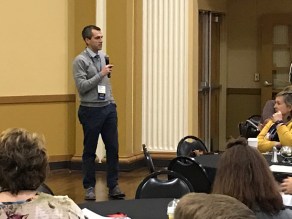
 I recently ran into a guy named Michael following a session at a social studies conference. Michael teaches history in a large, urban high school with a ton of low SES and ELL kids. His situation seemed so desperate to me that I had to ask him what strategies he used to convey content and meaning, how he got kids to makes sense of historical information.
 We all love the Stanford History Education Group. What’s not to like? You get incredible lessons aligned to the NCSS C3 standards. And for us Kansas folks, they aligned perfectly to our state standards. They great for training kids to use evidence, think historically, and develop arguments with evidence.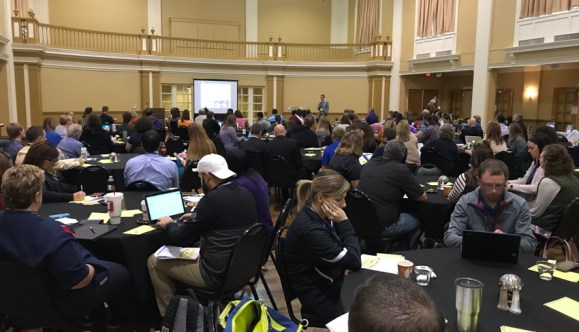


 Jill Weber is a middle and high school teacher in Cheney, Kansas. Today she’s sharing about the Historical Thinking Boot Camp she takes her kids through every August.