All posts by Kori Green

Unknown's avatar

About Kori Green

I teach 9th and 10th grade history at Wichita High School East. I enjoy U.S. history, dabble in British history, and love incorporating technology in the classroom.

You’ve Earned It

Some of us are starting our winter breaks, others will start this week. Let’s all agree to take advantage of the time off, okay?

a1f8f52ac56186e16296b601b3f9654f

The weeks right before break are a rush of projects, grading, concerts, sporting events, class reward/holiday parties, and a dozen other little items that simply must be done before you can leave the building. And those are just your school obligations . . .

So this week I’m not going to write about some cool new tool or trick to use, I’m going to to tell you to go read a book, spend time with your family, take the dog for a walk (if you’re not in a part of the country that isn’t currently in the deep freeze). Take time for yourself and recharge; Edutopia agrees with me and TED has an entire playlist on the importance of self-care. You can do some work over break, you know we all will, but let’s agree to find a better balance during this time away from school.

We’re taking our own advice at Doing Social Studies and won’t have a new post next week so we can all enjoy the time with our loved ones (and it’s not like you were really going to wake up on Boxing Day ready to see what’s new on our site). We’ll have a fresh post for you in the New Year to get you excited about what you can do in the classroom, whenever it is you have to return.

After one more nap.

Professional Growth and Development: The Monticello Teacher Institute

Joe Zlatnik is an 8th Grade American History teacher at Basehor-Lindwood USD 458.

monticello_2010-10-29

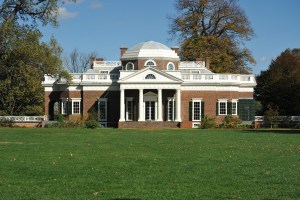
“I am as happy no where else and in no other society,” Thomas Jefferson once wrote, “and all my wishes end, where I hope my days will end, at Monticello.”

Professional development opportunities, when relegated to our buildings, is often dull, not specific to our content, and, worst of all, uninspiring. Fortunately, there are a number of quality professional development opportunities for Social Studies teachers that will significantly impact us as educators. Coming up in November is the Kansas Council for the Social Studies Conference in Salina. The next month, the National Council for the Social Studies will have their annual conference in Washington D.C. While both of these are great opportunities to learn from some of the brightest minds in our profession, there are other professional development opportunities that are impactful on a more personal level.

This past July, I had the honor and privilege of being selected to take part in the Monticello Teacher Institute: The Barrringer Fellowship. This weeklong experience allowed me to spend time in Charlottesville, Virginia immersing myself in the world of Thomas Jefferson. We spent time at Monticello itself, the special collections library at the University of Virginia, the Robert H. Smith International Center for Jefferson Studies, and a multitude of locations significant to Jefferson’s life or the study of his life. Continue reading Professional Growth and Development: The Monticello Teacher Institute →

Countdown to the Election – In the classroom

An election year is like catnip for social studies teachers: our content in action, teachable moments galore . . . but then you get a race that’s unlike any in our lifetime. Granted, the United States has had elections as contentious before (in the 19th century, multiple times) but that doesn’t make this year’s election any easier to teach. Tonight we’ll all have front row seats as the candidates meet face to face in what promises to be an interesting debate. This also means that we’ve been getting lots of lists of election year resources, but what do they look like in practice? Here’s just a glimpse of what I’ve been doing in my 8th grade U.S. History classroom (but could definitely be used in multiple grade levels).  

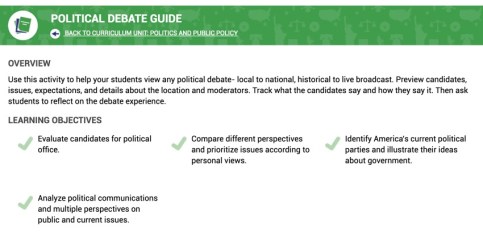
icivics-debateI’ll be sending my kids home with the kids home with iCivics’ Political Debate Guide this evening and there will be two more debates after tonight if you want to get your kids watching. Can I say how much help iCivics has been this year? It’s not just good for the games, I’ve been loving their Politics and Public Policy and Government and the Market units.
The Politics unit has lessons that break down a political process that can be confusing into understandable pieces and doesn’t leave out the media’s role. As focused as elections can be on the economy, lessons from the Market unit went along way to help me explain taxes and our federal budget. But the iCivics game Win The White House was hit after all the facts and figures. Just about all the kids got the correct answer for the number of electoral college votes required to win the presidency on my elections test.

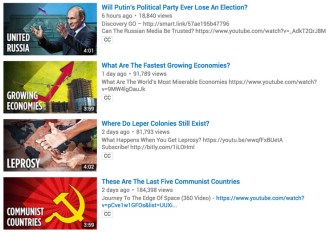
seeker-youtubeI also supplemented the above with Seeker Daily explainer videos on the candidates and parties. If you haven’t used Seeker Daily videos yet I highly recommend them. They’re all around three minutes long and explain matters both foreign and domestic – a great companion for CNN Student News. When CNN Student News has a story that I feel the students could use a little more background on, I go to Seeker and can usually find something that will clarify the issue. What is the difference between Sunni and Shiite Muslims? Got it. Why does Russia hate the United States? Yup. If you don’t use CNN Student News on a regular basis I would recommend them on Fridays. Beside all the regular election coverage they’ve had a series on Fridays focused on the election in general: electoral college, battleground states, history of televised debates…good stuff.

I hope this helped a little. We may not agree with everything the candidates are saying, but you can’t deny that they have the kids’ attention. We need to do what we can to capture this interest and hopefully create some engaged citizens in the process.  

Hexagons? In History?

Students in Ms. Green's class using hexagons to refresh their memories and make connections to the curriculum.
Students in Ms. Green’s class using hexagons to refresh their memories and make connections.

I am trying to be more mindful of pulling my students’ learning through this year. You know, revisiting what they’ve already learned so it doesn’t fly out of their brains never to return (at least not to return until their high school American History teacher says they should have learned this in 8th grade and have to review it…).

I tried out a neat tool this week with my students that Glenn Wiebe showed the KCSS Executive Board over the summer. The ClassTools.net Hexagon Generator allows you to select up to 30 terms that will then be placed on little hexagons which you will then have the pleasure of cutting apart (good task for a student aide with time on her hands, wish I had one).

With only three days this week due to Parent-Teacher Conferences I didn’t want to jump into something new before their long weekend, so I decided to roll out the hexagons. I used a mix of ideas, people and events that we’ve covered since the beginning of the year. Each table got a set and my directions – if the terms on their hexagon have a connection they can touch, but for each side that touches there has to be a connection. Continue reading Hexagons? In History? →