Category Archives: best practice

A Guide to a New Type of Test

I got to know Jill Weber about five years ago when we started our second Teaching American History grant at ESSDACK. And she’s been great about opening up her classroom in a variety of ways including posting ideas and strategies on her blog A View of the Web.

Jill recently shared a post with our study group that she is allowing us to cross-post. Enjoy!

glennw

—————————-

My 7th graders will be taking their first test for me this week.  I thought this would be a good time to talk about what a Social Studies test in Mrs. Weber’s class looks like.

Social Studies has changed.  Teachers should be implementing activities, lessons, and strategies to help students read and analyze primary sources, think critically, and “do” history.  We should be teaching kids how to become historians.  How to question sources, look at conflicting view points, and draw conclusions based on the evidence that is given to us.

But what does that LOOK LIKE?

And what does it look like on a TEST?

I have spent the last three years developing a method for creating unit tests/assessments that involve more analysis and application as opposed to simple regurgitation of facts.

Here’s a taste of what you will and won’t see on one of my tests. 
Continue reading A Guide to a New Type of Test →

“Coach” should not be an insult. Take pride in all aspects of being an educator

coach shortQ:  What is the most common first name of social studies teachers throughout Kansas?
A:  Coach

We all know the old cliche that social studies is the content discipline for those educators who don’t want to teach PE but also don’t want to teach a “real” subject like science or math.  We can imagine their idea of a perfect lesson: assigning students text to read out of the book, followed by a worksheet of basic, low-level questions, and ending with a full-length movie while they plan their next practice. We expect them to play favorites with their specific athletes and put all of their intellectual time and effort into their respective sport.

I’m not convinced the cliche is entirely accurate.

Perhaps I was fortunate during my time at the University of Kansas where my core group of prospective social studies teachers took a relatively strong interest in the content area we were studying.  Some of us were coaches, some of us were not.  Yet nearly all of us were able to engage in thoughtful debate covering a wide range of serious, intellectually stimulating topics.  So I did not really face the coaching cliché until two summers ago. Continue reading “Coach” should not be an insult. Take pride in all aspects of being an educator →

Inspiration from American Colossus Part Two: The Ascendancy Cycle

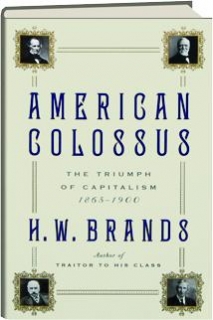
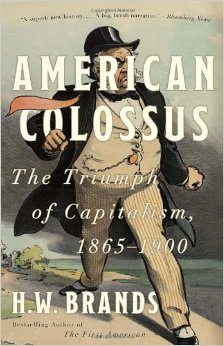
brands bookIn my previous post I wrote of the inspiration I gained from H.W. Brands’ book American Colossus: The Triumph of Capitalism 1865-1900; specifically how Brands discussion of the dueling natures of capitalism and democracy could lead to a solid classroom discussion in an 11th grade US History course.

This post is regarding another aspect of Brands’ thesis, something that Brands calls the ascendancy cycle in American history.  What follows is far from a polished lesson, but instead the beginnings of an idea that hopefully will result in something beneficial for my students.

In the book, Brands claims that the competition between the forces of pure capitalism and pure democracy can be used to characterize the last 200 years of American history.  This competition has resulted in the proponents of each of these founding principles consolidating power, furthering their beliefs, losing that power to the opposing group as they create policy furthering their agenda, so on and so forth.  I believe that looking at US history through this lens provides students a concrete example of the ebbs and flows of American politics and how these elections can fundamentally alter the course of the nation. Continue reading Inspiration from American Colossus Part Two: The Ascendancy Cycle →

Reading as professional development and capitalism vs. democracy

Welcome to Scott Peavey, high school US and World history teacher at Gardner Edgerton. Scott will be writing regular posts as the newest KCSS board member.

——

As social studies teachers we constantly are finding little tidbits of information in our everyday “civilian” lives that create that special spark.  I consider that spark to be the feeling of creativity and insight that educators get whenever they identify an opportunity to cultivate a teachable moment in their classroom.  The source materials for these sparks are diverse; anything from reading the news to watching my one-year old son race across the living room floor.  Over the last week I felt that spark as I was undergoing the most cost-efficient social studies professional development there is . . . reading.

triumphI recently began H.W. Brand’s book American Colossus: The Triumph of Capitalism 1865-1900.  Last school year was my first formally teaching 11th grade US History and I quickly found that the Gilded Age and the rise of the industrialists was a weak point in my content arsenal.  My goal in reading this book Continue reading Reading as professional development and capitalism vs. democracy →

Historical TV, videos, and history teachers

16 mm projector

We’re all very aware of the stereotypical social studies teacher. Former jock. Current coach. Always busy with game plans and practice schedules. Hands out worksheet packets on Monday with a test on Friday. Constantly interspersed with movies and videos along the way.

We also know that the stereotype very seldom rings true. I was a coach for years. We all know great social studies teachers who teach and coach. I get the chance to wander the world working with all sorts of excellent social studies teachers. Keil Hileman in the Kansas City metro area district of De Soto uses 25,000 historical artifacts as part of instruction. He was the Kansas teacher of the year several years ago. Nathan Mcalister in Royal Valley MS simulates Civil War surgery with original medical tools, hosts a yearly history fair with kids hacking out canoes and building sod houses. His kids pushed an actual bill through both houses of the Kansas legislature. He was selected as the Gilder Lehrman national teacher of the year.

Kori Green routinely connects her students with kids around the world in live chats as they solve authentic problems. Jon Bauer teaches in one of the most isolated places in the state of Kansas while implementing all sorts of powerful learning activities. Activities such as having 8th graders rank historical events and developing a March Madness tournament as an end of year summative assessment. Jill Weber uses a variety of technologies to encourage high levels of learning including a TV Reality Show Pitch.

And yes. There are some teachers who perhaps could work a bit harder on their instructional design. I’ve seen those as well. But here’s the thing. Continue reading Historical TV, videos, and history teachers →