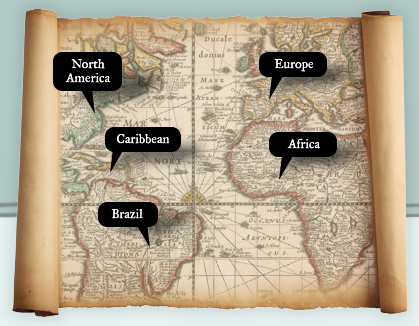
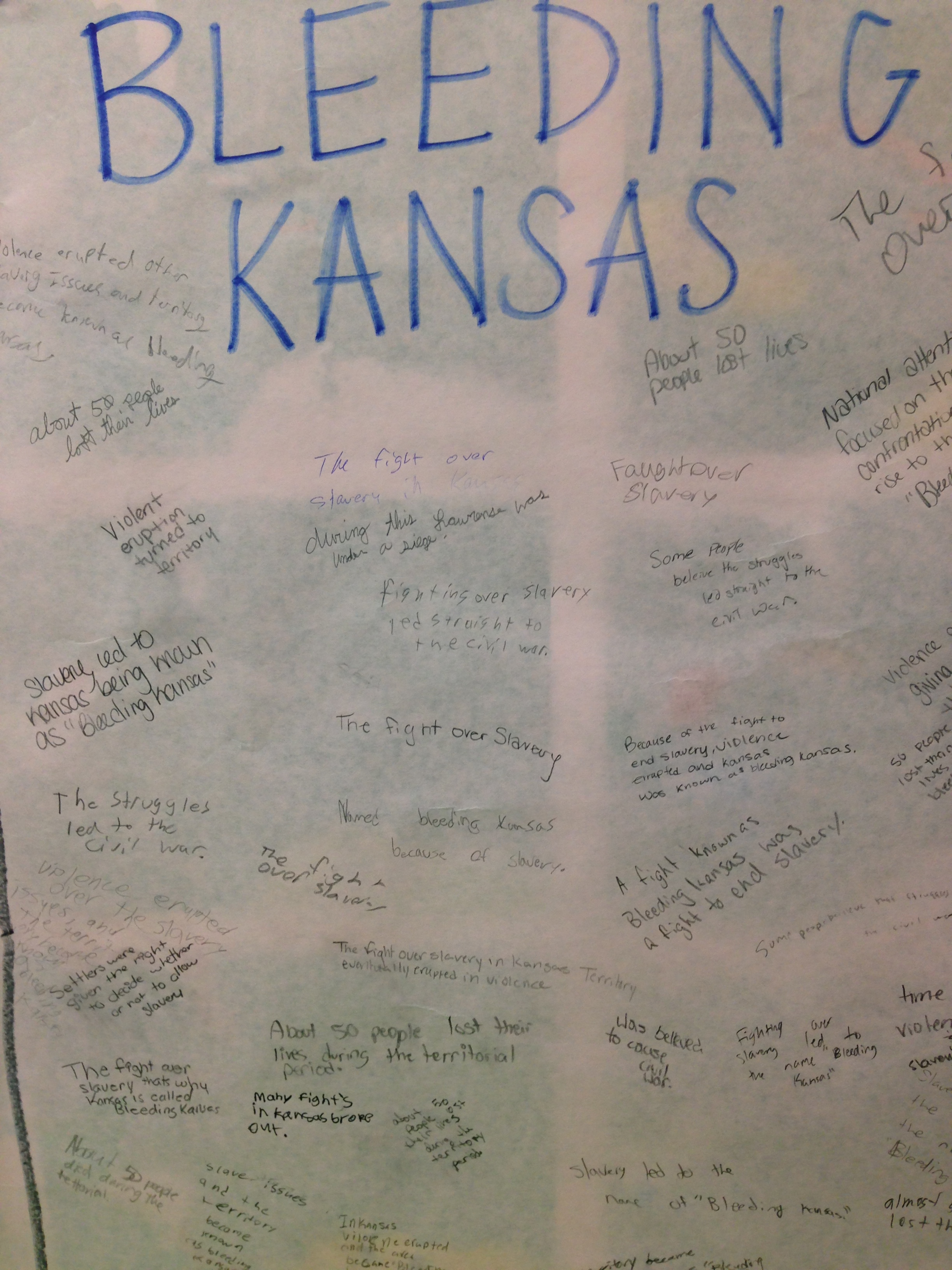
One thing I have learned as a teacher, kids really do say the darndest things! Recently my Kansas History class started in on Bleeding Kansas, and I realized that very few of my students had retained any prior knowledge on the subject. To get the students interested in the topic, and to provide them with some basic knowledge before we really got started on the topic, I planned a pre-reading strategy using key words from the Bleeding Kansas chapter in our Kansas Journey textbook. Continue reading “Was Kansas Actually Bleeding?”
Category Archives: best practice
Pre-Service Teachers Contribute Curriculum
Pre-Service teachers are getting into the game and classroom teachers can benefit. The HGSS undergraduates at KU have a thriving student chapter of the National Council for the Social Studies – the Kansas University Council for the Social Studies (KUCSS) – and they’ve been using their powers for good.
KUCSS has partnered with the Robert J. Dole Institute of Politics in Lawrence, Kansas to create instructional materials for middle and high school social studies teachers. The Dole Institute of Politics has launched an online exhibit commemorating Dole and his service in WWII which resulted in a debilitating injury that would later largely shape his work as a Senator resulting in the Americans with Disabilities Act (1995).
If you’d like to read more about the collection and their collaboration with KUCSS you can check out the full article here.
Make sure to check out the WWII Letter Collection from the Dole Institute and follow the In the Classroom link for the lesson plan.
And if you haven’t taken the opportunity to visit the Dole Institute of Politics in Lawrence it’s well worth a trip. Heck, make an I-70 road trip of it: start at the Eisenhower Presidential Center in Abilene, hit the Dole Institute, and then on to Liberty, Missouri for the Truman Presidential Library and Museum – just imagine all the government fun!
Kansas Social Studies conference is gonna be awesome
For some of you, this post may not be that relevant. You don’t live close to Kansas. Or maybe you’re not a social studies teacher. But if you live in Kansas, or close to Kansas, or don’t mind making a trip to Kansas and you’re a social studies teacher, have I got a deal for you.
For the last two years, the Kansas Department of Education, the Kansas Council for History Education, and the Kansas Council for the Social Studies has co-hosted a one day conference focused on best practices and instructional resources. It’s always a great time. You make new friends. You meet old friends. You eat great food. You walk away with door prizes. And you always learn a ton.
The Kansas Geographic Alliance, the Kansas Council for Economic Education, and the Kansas Historical Society all show up as well. Basically, if you have a question about social studies, this conference is the place to be. And it really is for anyone who wants to be a part of an awesome learning opportunity.
This school year, the conference is scheduled for
Continue reading Kansas Social Studies conference is gonna be awesome
Trans-Atlantic Slave Trade Database
Having students internalize historical events is a task I try to achieve in my high school Geography and World History classrooms almost every lesson. This is a difficult mission, but it does not prevent me from asking myself, “How can I make this topic personal for students?”
This is the same question I pondered when developing lessons about the Trans-Atlantic Slave Trade. Yes, students arrive to me with prior knowledge about the subject, but their familiarity with the topic is only surface-deep. I have learned that investigating history from the bottom-up has made my students more attuned into the field of history.
Therefore, the Trans-Atlantic Slave Trade Database has made the grassroots of this theme come alive in my classroom. The immense about of information compiled in this database is astounding and truly makes my students appreciate the subject. There are maps that illustrate where the 12.5 million slaves were embarked and disembarked, but what catches my students’ interest the most is the “African Names Database”, which houses 91,491 names of Africans who were enslaved. Not only are their names provided, but also their age, height, sex, name of the ship they were transported on, and where they were embarked/disembarked.
By clicking on the “Voyage ID” for each African listed, you can even see more information about the ship, such as its tonnage and the name of the captain! This is a treasure-trove of information that makes the Trans-Atlantic Slave Trade relevant to students.
The site even offers lesson-plans for teachers, who may want to know how to incorporate this information into the classroom effectively. The slave-trade may have ended over a century ago, but this database helps students realize the significance of this event.
Oodles of Constitution Day Resources
(Cross post from History Tech)
It’s that time of year again. Constitution Day 2014. September 17.
You know the story. A group of guys from different parts of the country with different ideas of how to govern got together and came up with a pretty amazing document. My favorite Founding Father?
Ben Franklin. He’s kind of like the sleeper pick in your fantasy football league – everyone knows he’s out there but they ignore him because all the focus is on Jefferson or Madison or one of the other first rounders. But you draft him anyway cause you know he’s got the skills.
Ben was smart, irreverent, great with people, well-read, the ladies loved him, he had that whole kite / electricity / scientist thing working, and was by far the best part of 1776 and John Adams. What’s not to love?
And so it’s fun to go back and read some of what Ben had to say about the document he was preparing to sign: Continue reading Oodles of Constitution Day Resources