
Category Archives: graphic organizer

H.I.T. Notebooks: A Different take on Interactive Notebooks

jill weberJill Weber, 2016 Gilder Lehrman Kansas History Teacher of the Year, has joined the Doing Social Studies writing team and will be posting throughout the year. The following is a cross-post from her excellent site A View of the Web.


I used Interactive Notebooks in my social studies class for eight years.  The majority of the students loved them.  But I had a serious love/hate relationship with them.  And after taking a long look at the pros and cons of the books and my current curriculum, I decided not to continue with the interactive notebooks last year.

While I found it a relief not having to keep up with the grading of 60+ notebooks, there was something missing from my class.  I had a number of kids ask me why we weren’t doing them anymore, and others who were disappointed that the “hands on” cutting, pasting, and creativity was replaced with more writing assignments.  I felt guilty that my answer was “because I just couldn’t keep up with all the grading.”

That got me thinking on ways that I could bring the interactive notebooks idea back without having all the copious grading that went with it.  I talked with our language arts teacher, who uses her interactive notebooks as a tool to help organize materials and doesn’t grade it at all.  I liked that idea.

But I wanted more.  I wanted a way to hold kids accountable.  I wanted them to take pride in the organization and appearance of the book.  And, most of all, I wanted it to be used as something more than a storage device.  I want it to be something they will reference throughout the year.

The Idea:
Then an idea started to take form.  An idea to use the notebook more like a detective’s note book when trying to solve a crime.

So this year, we have: the  Historian In Training Notebook or HIT books. (HIT is a cool name for a middle school activity, right? )
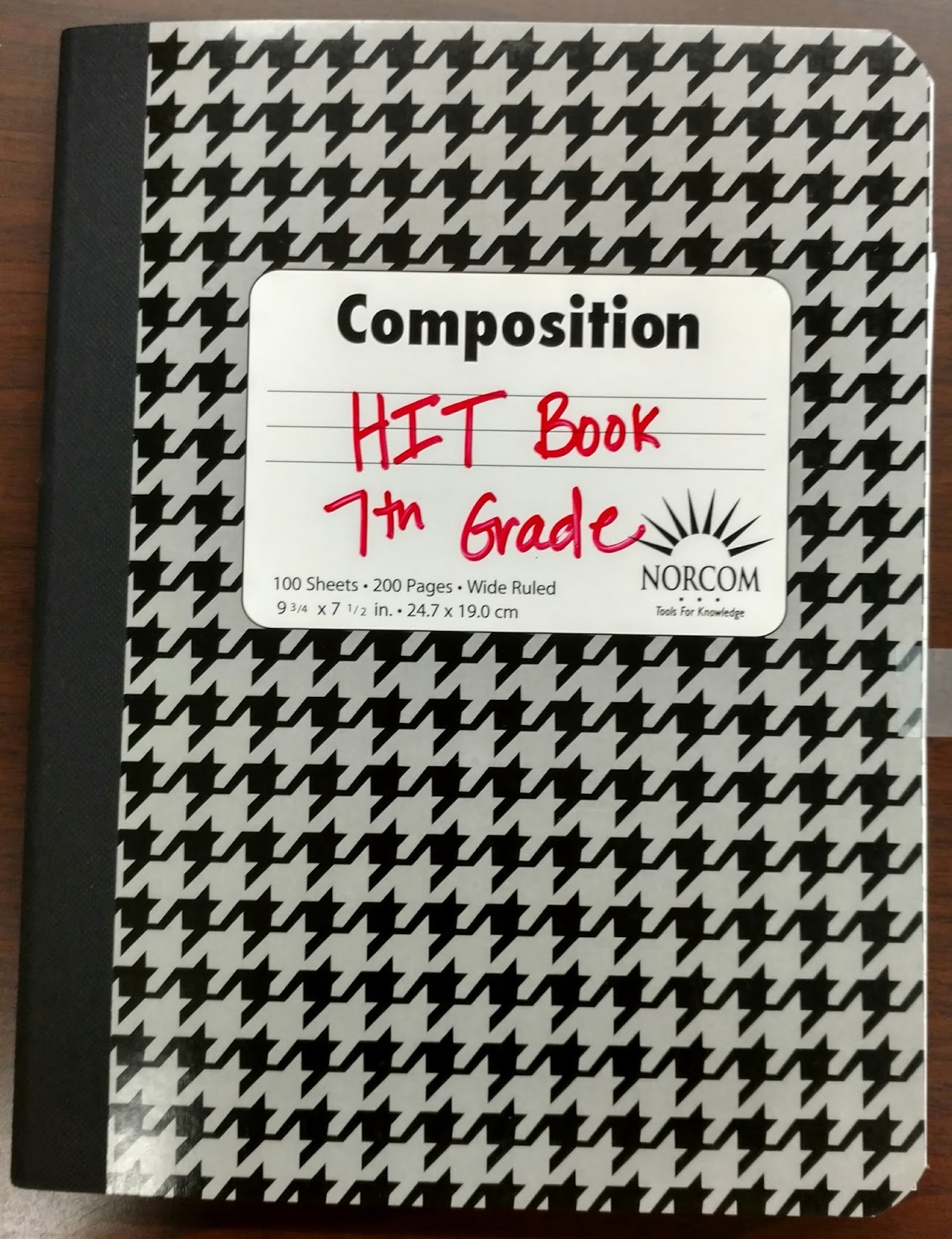
The HIT notebook will be designed as sort of a history detective notebook that we’ll use to identify historical thinking techniques, analyze primary sources, keep information over specific historical questions, and refer back to skills learned throughout the year.

A few examples of possible pages  . . .  Continue reading H.I.T. Notebooks: A Different take on Interactive Notebooks →

6 C’s for analyzing primary sources

history project logo

Over the last few years, we’ve seen the instructional strategy pendulum swing over to encouraging more use of evidence by students to solve authentic problems. And there’s tons of stuff out there to help us and students make sense of primary and secondary sources.

You’ve got the Library of Congress primary source analysis worksheets. You’ve got the awesome stuff bySam Wineburg and Stanford. There’s the DocsTeach site by the National Archives as well as all of their document analysis lessons / worksheets. And lots of things like Historical Thinking Matters and Historical Scene Investigation.

But a lot of people don’t seem to be aware of the excellent work that the History Project at the University of California, Irvine does with helping student evaluate evidence. We have been perhaps overloaded with Wineburg’s stuff so much that we don’t think that we need to go out and look for other types of tools.

Don’t get me wrong, Sam. I absolutely love your stuff. Sourcing, contextulization, corroborating. I am all in. But we always said that it’s okay to date other people. And the History Project has some useful stuff.

I especially like their 6 C’s of Primary Source Analysis graphic organizer. Continue reading 6 C’s for analyzing primary sources →

Informed Citizenship: Analyzing Bias in Current Events

The following is a guest post from Basehor-Linwood Middle School teacher Joe Zlatnik.  Joe teaches 8th grade social studies at BLMS.

news1The concept of citizenship can be found throughout various social studies curricula. KSDE social studies standards are designed to “prepare students to be informed, thoughtful, engaged citizens…” and the National Council for the Social Studies C3 curriculum seeks to offer opportunities “for students to develop as thoughtful, engaged citizens.”

However, the steps to becoming a citizen are not clearly outlined. It is as if you become a citizen as a byproduct of going through these prescribed curriculums. I argue that one will not simply become an engaged citizen by completing a curriculum, but that students also need to have a way to decipher the ever-changing world we live in.

Being an engaged citizen today is, perhaps, more difficult now than it has ever been. The CBS Evening News with Walter Cronkite has given way to Fox News and MSNBC. We now live in a world with a 24-hour news cycle, multiple cable news channels, and a bias that is inherent in almost all the information that we receive.

As reporting has been replaced by editorializing, we find ourselves struggling to formulate our own opinions due to being overwhelmed by talking heads from across the political spectrum telling us what we should think. Developing a sense of citizenship amongst students, while daunting, is now more important than ever.

Continue reading Informed Citizenship: Analyzing Bias in Current Events →

Stop! In the Name of…Writing?

stoplight2In an effort to improve the writing skills of my students and better prepare them for the Kansas Writing Assessment, the Multidisciplinary Performance Task, I have begun implementing the Stoplight Writing strategy.  I attempted to use this strategy in my classroom last year, but as a last ditch effort before the test rather than a regular activity the students experienced throughout the entire school year.

This year however, my students are writing every unit using stoplight writing, and the dramatic difference in the finished products from last year to this year are extraordinary.  Last year I feared that my 7th grade students didn’t know how to write a complete sentence, this year I am finding that my expectations for the students are too low and every unit I raise the standards for their finished work. Continue reading Stop! In the Name of…Writing? →

The end is near! Letters to next year’s students

Can you tell it is May?  Are your students acting as crazy as mine?  Don’t worry, the end is near. We just need to get them to hang on for a couple more weeks!

Throughout the year I have students keep all of their work in binders within my classroom and at the end of each unit we empty most of the material out.  What remains in the binder for the entire school year are the maps from each unit and a vocab log that my students have kept through the year as a resource when common vocabulary words are addressed in multiple units.  As I was working to wrap-up my content and start emptying student supplies out of my classroom, I wanted to come up with a way to check  student vocab logs without having to go through and grade each individual binder (80 students x 50+ words, no thanks!).

So, I had my students write a letter to the 6th graders that I will have next year as 7th graders, using the words from their vocab log to explain what the 6th graders would be learning in my class. Continue reading The end is near! Letters to next year’s students →