Category Archives: strategies

SHEG HATs for the win

Hat fail.

I’m not talking about an actual hat. Not a baseball cap. Or a visor. Or a bowler, beanie, beret, or bucket hat.

I’m talking about SHEG HATS.

As in Stanford History Education Group and History Assessments of Thinking.

I’m sure that you’ve been over to the very useful  Stanford History Education Group’s site with its three different tools, right? (If you haven’t, mmm . . . go there now and be amazed at how your life will be changed.)

All of us at the KCSS have been pushing Sam Wineburg’s work for years so I’m hoping you’re already familiar with the work his SHEG group has been doing around the idea of reading like a historian. They’ve packaged their work into three chunks – instructional lessons that focus on training kids analyze evidence to solve problems, onlive civic literacy lessons, and wait for it . . . Continue reading SHEG HATs for the win →

Structure strips. Seriously . . . where have you been hiding?

(Glenn posted the original version of Structure Strips on his History Tech site several months ago. He loves the idea of Structure Strips so much, he’s sharing it with us here at Doing Social Studies. Enjoy!)


Over the last few months, I’ve had the chance to be part of several teacher conversations focused on the integration of social studies and literacy. And for the last few years, I’ve had the chance to work with the Kansas Department of Education and Kansas teachers as we rolled out our revised state standards and assessments – both of which concentrate on finding ways for kids to read, write, and communicate in the discipline.

So while I am not some super duper ELA expert, I did think that I knew a little something about literacy tools. But I recently got a great wake-up call that let me know that there is always something new to learn.

I was doing some internet browsing for literacy activities and ran across references to something I had never heard of before. And it looks like an awesome tool to slip into your bag of tricks.

Structure strips. Continue reading Structure strips. Seriously . . . where have you been hiding? →

Structured Academic Controversy – Lewis and Clark Edition!  

Today’s post is written by Cheney, Kansas middle and high social studies teacher Jill Weber. Jill is the 2016 Gilder Lehrman Kansas History Teacher of the Year.


Sometimes it all goes right. Thursday morning I didn’t think the day was going to turn out. It was just one of those rough mornings. Bad news and frustrations everywhere I looked. Before class started, I thought

Man, I’m gonna really have to fake-it-to-make-it today.

But then class started, and we got rolling with our topic and activity. By the end of my first block I knew I wasn’t gonna have to “fake it.” Today was AWESOME!

And it was made possible by the Structured Academic Controversy (SAC) activity I found using Stanford History Education Group. If you aren’t using SHEG in your classes . . . get on it! Seriously one of the best resources out there for incorporating and teaching with primary sources.

The SAC provides a controversial questions, documents for research, and the procedure for students to participate in small group debates. Students learn how to argue with evidence! And middle school students LOVE to argue!

The entire activity took two full class periods (we are on a block schedule, so two 75 min. classes) Here’s how it went down . . . Continue reading Structured Academic Controversy – Lewis and Clark Edition!   →

Yup, I’m smarter. Thanks Smithsonian!

A couple of months ago, I felt smart. I had just finished a full day with some of the best social studies teachers around. We had talked about hyperdocs, completed a BreakoutEdu, identified photos as either real or fake, learned about a variety of graphic organizers, and participated in an awesome video conference focused on the Smithsonian Learning Lab with Darren Milligan and Kate Harris.

I felt smart. I had learned some stuff. I had taught some stuff. My brain was feeling good.

I should have stopped while I was ahead.

But after learning more about the Learning Lab, I decided to dig in a bit and see what all might be available online from the Smithsonian. And that’s where I got into trouble. About an hour later, I dug my way out of the incredible amount of goodness that Smithsonian folks have made available for educators. I felt smarter but not smarter all at the same time.

Smarter because I learned about some sites and resources that were new to me. Not smarter because . . . seriously, how I have I not known about these things before?

Just so you know, there is a ton of materials, lesson plans, and resources that the Smithsonian has put online. Seriously . . . a ton. Darren told us that the Smithsonian isn’t really sure how much stuff they have – he rounded it up to around 160 million objects. And that’s just the stuff in their collections, not the lesson plans and online exhibitions.

So just to share some of what I learned, here a few places that you need to pencil into your schedule to visit: Continue reading Yup, I’m smarter. Thanks Smithsonian! →

Balancing Security: Past, Present and Future

Hopefully you were able to join us at the Kansas Social Studies Conference earlier this month or were fortunate enough to get to attend National Council for the Social Studies annual conference in San Francisco just before Thanksgiving.  If you’re already looking for your next social studies fix or haven’t had the opportunity yet, might I suggest a trip to Kansas City?


Greetings, my fellow Kansans!  With any luck the year has settled in for you.  It has been a beautiful beginning, and the kids are just as wonderful as ever!  My name is Jeff Benes and I am the Past President of the Missouri Council for the Social Studies.  I live in Westwood, Kansas, but work in Gladstone, Missouri (be honest, how many of you had to Google those two locations). This school year, at the end of February, the Missouri Council is hosting our annual conference, and we wanted to reach out to you as neighbors and fellow teachers.  

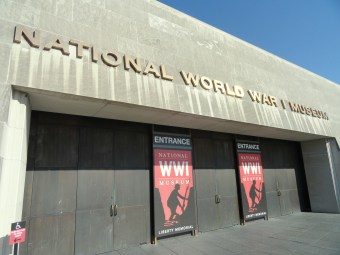
National_World_War_I_Museum_-_Kansas_City,_MO_-_DSC07446The conference will be held on the Missouri side of Kansas City, at the National World War I Museum and Memorial, the weekend of February 23 and 24 (Friday and Saturday).  If you have never had a chance to visit, this is the time.  The museum itself is worth the weekend to come visit (and if you are a museum buff, you will need more than one day).  On top of that, there will be great presentations in both content and practice, incredible speakers, a great lunch, and the opportunity to network with people just like you:  Passionate teachers looking to hone their craft.   Continue reading Balancing Security: Past, Present and Future →