Increasing student engagement through place-based education: The Flint Hills Maps & Education program

Guest Post: This month we have a guest post from Anne Wilson, Map Program Coordinator for the Flint Hills Map and Education Program.


As teachers, we often hear students lament:  “What does this have to do with me?”  We know if our kids believe an idea actually affects them, it all of a sudden really matters.  However, actually relating learning to students’ own lives and local environment takes time and background knowledge we don’t always have.

Now a grass-roots team of teachers in the Flint Hills region has developed a new “place-based education” program – designed to connect learning to students’ own heritage, culture, landscapes, ecology, economy, and experiences as a foundation for the study of core subjects.

How important is place?  Bio-regionalist author Wendell Berry writes, “If you don’t know where you are, you don’t know who you are.” Many of our students think they’re from nowhere.  They are connected to everywhere but where they are.  This program gives them the gift of pride, understanding and commitment to their place.

The bonus is: Continue reading Increasing student engagement through place-based education: The Flint Hills Maps & Education program →

Civic Engagement In The Classroom . . . We The People

adam-topliff

This week’s blogger is Adam Topliff: I teach 8th Grade Social Studies & Civics at Wamego Middle School in Wamego, KS.  I love all things Hamilton!


It’s that time again! Teachers and kids across the nation are preparing to head back to school.  As we prepare to kick-off the new school year, it might be important to start considering the ways you are working to develop more civic engagement with your students.  For the past couple of years, Education Commissioner Watson has stressed the importance of an education that develops the 21st century student.  One key element of that is having our kids understand their role in the world around them and how they can impact it.  In short, we are talking about civic engagement.  Check out the KSDE HGSS site to learn more about the initiatives to bring more civics to classroom.  

A key aspect of the civic engagement initiative is Civic Knowledge: Continue reading Civic Engagement In The Classroom . . . We The People →

Educators and Art Museums: Doing Social Studies Together

na art museumThe following is a guest post written by Bonnie Thomas.  Bonnie is the Manager, Education Programs and Resources at the Nelson-Atkins Museum of Art in Kansas City, MO.

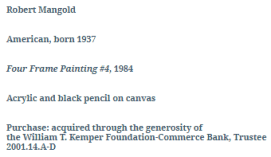
“School subjects are like individual rectangles, the teacher explained. And this long, curved line represents the arts and humanities, linking concepts and modes of thinking across disciplines.”

nelson atkins painting

painting creditsThis teacher, speaking in front of a vibrant geometric painting by the artist Robert Mangold, was one of 15 participants in a partnership project dedicated to exploring how art museums can support humanities education in public schools. Her comments emerged during a reflection activity in which teachers chose an artwork to represent their experience in the partnership project. Many other participants made similar comments, pointing out newly recognized connections between classroom subjects and visual art.

These teachers had first gathered several months previously at The Nelson-Atkins Museum of Art, an encyclopedic art museum in Kansas City, Missouri. The Nelson-Atkins, with funding from the National Endowment for the Humanities, was seeking teachers’ input on how its strong collection of American art could be leveraged to strengthen student learning in American history and related social studies topics.

Continue reading Educators and Art Museums: Doing Social Studies Together →