Whelp, teaching in Kansas and across the country has changed due to COVID-19. Governor Laura Kelly made the decision to close our physical buildings through the end of the school year, but her prioritizing safety did not bring an end to the education of our students.
Photo by Anastasiya Gepp on Pexels.com
If any state was ready to adapt to a change like this, it’s Kansas. Already in the process of school redesign, this is a challenge that Kansas is uniquely prepared to face. The Kansas Department of Education’s Continuous Learning Task Force set out guidelines for schools with the direction that districts should interpret them in the manner that will work best for their students. Most districts are taking this additional week following Governor Kelly’s announcement to make these decisions and meet with their teachers on what school is going to look like for the remainder of 2019-2020.
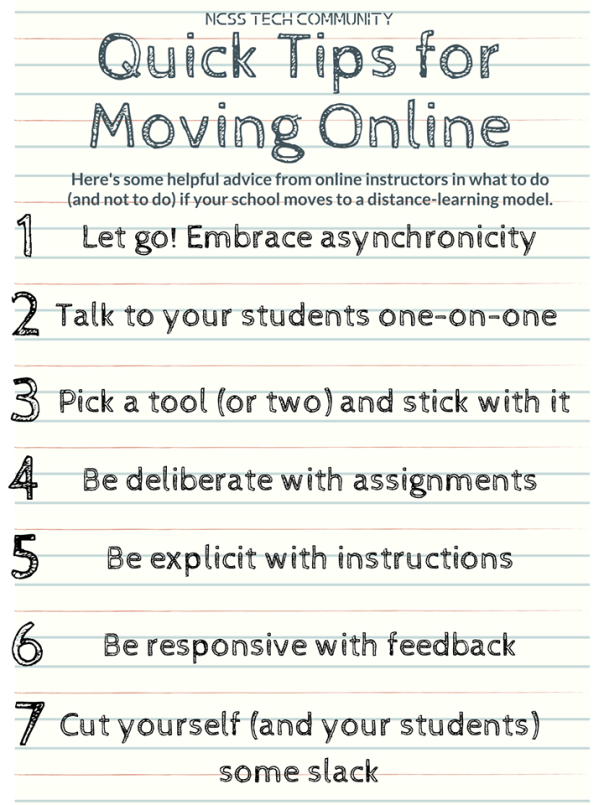
We’ve got this, and KCSS and Doing Social Studies is going to do all we can to help. The resources are coming at us like a fire hose, and that’s great, but we’ve got to be smart. The NCSS Technology Community has pulled on their experience and resources to come up with these tips as you wade into the new normal.
As your Doing Social Studies community figures out their own classrooms we’ll share with you what we’re doing and the resources that we’ve found the most helpful.
The Kansas Council for the Social Studies is an affiliate council to the National Council for the Social Studies. We just wrapped our national conference in Austin (it was great, more on that next week) and now is time for elections.
If you are a member of NCSS you should have received an e-mail with your voting code and ballot. As a civically minded individual, I’m sure you want to be an informed voter, so here is the link for the biographies and position statements for all the candidates for all positions.
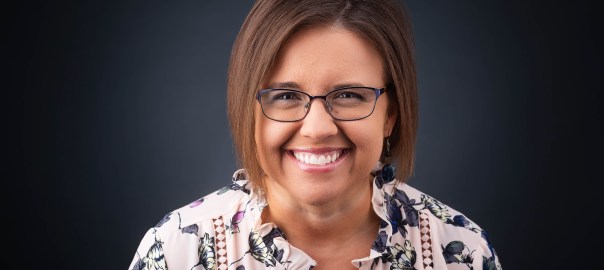
As the Kansas Council, we would like to endorse Tina Ellsworth as the At-Large Candidate for the NCSS Board of Directors. We at KCSS have worked with Tina for years and know she will advocate to the fullest for what’s best for students and social studies educators.
Tina M. Ellsworth At-Large Candidate for NCSS Board of Directors
Biography: Tina M. Ellsworth currently serves as the K-12 Social Studies Coordinator for Olathe Public Schools in Olathe, KS where she oversees content specific professional development, curriculum development/revision, resource adoption, etc. for all social studies teachers in grades K-12. Ellsworth holds a B.S. in Social Studies Education, a M.A. in History, and a Ph.D. in Curriculum and Instruction with an emphasis on social studies education. She has been an educator for 16 years in which time she has served as a middle school and high school social studies teacher, a graduate teaching assistant at the University of Kansas, a pre-service teacher supervisor, a senior economic education specialist at the Federal Reserve Bank of Kansas City, and in her current role. She has served as president for the Missouri Council for the Social Studies, and served on its board. She was an integral part in starting the Kansas University Council for the Social Studies, and recently helped coordinate the official launch of her district’s first Rho Kappa chapter! She has presented at the state and national conferences, and has served on state committees for social studies education. She is also published in Social Education and Social Studies and the Young Learner. Currently, she is organizing teachers in the Kansas City area who are interested learning more and advocating for racial and social justice issues. She has also been named NSSSA’s 2019 Mel Miller Outstanding Social Studies Leader of the Year.
Position Statement: An active and engaged citizenry is at the root of social studies education. As its teachers, we long to help young people make informed and reasoned decisions that serve the public good and preserve our democracy. A true commitment to this purpose first requires that teachers actively engage in their democracy as well. Advocacy for social studies education isn’t only about voting, fighting for more minutes in a day for social studies instruction, or about teaching students how to engage. Advocacy is seeking out your own professional development to better equip you to take informed action in any capacity. That new knowledge may result in action in your classroom by employing culturally relevant pedagogical practices; it may be pulling a colleague towards greater equity and inclusion in curricular choices; it may be educating administrators about restorative justice in discipline practices; or it may be speaking before the school board to advocate for what is best for all kids when structures and systems of power create barriers to fulfilling that mission. While doing this work is not unique to social studies teachers, it definitely should be led by them. May we stand in solidarity with each other as social studies teachers on behalf of all peoples across this great nation. May we lead the way in modeling what it means to be engaged citizens who are committed to honoring and building the capacity of every student.
Lori Rice teaches fourth grade at West Elementary in Wamego and is the current Kansas Council for the Social Studies elementary teacher of the year. You can find Lori on Twitter at @MsLRice. She also blogs on all things teaching (not just social studies) at The Educator’s Room.
Our world is changing; looking different today than ever before. In this evolving environment it is more important today than ever before to develop citizens who are prepared to take on the challenges our society is dealing with. We need students who are able to understand the past and use this knowledge to apply, create and synthesize solutions for tomorrow.
In 1956 under the title, Taxonomy of Educational Objectives: The Classification of Educational Goals. Handbook I: Cognitive Domain, Bloom’s taxonomy was published with an idea of giving educators a common bank of items to be used in assessments. Forty-five years later, in 2001, this framework was reevaluated as Bloom realized it could reach beyond assessment purposes. He believed it could serve as a common language for learning objectives across curricular areas. During this time of revision a few of the categories shifted. “Understand” was a verb used over and over by educators so this replaced “comprehension” and with this the nouns were changed to verbs. Lastly, evaluation and synthesis switched places making synthesizing the highest level; however, it was changed to “create”.
Photo by Fox on Pexels.com
Bloom’s has been used across classrooms for years. Adding a layer of technology to this chart allows students to remember, understand, apply, analyze, evaluate and create in ways that are meaningful and fun. This increases the engagement and retention of ideas and content from the classroom. Here are a few apps and websites to check out for each classification of Bloom’s Taxonomy.
Remembering: Students can use Google Searches or Kids Safe Search by Google to allow them to find facts and information. Word clouds like word art, tagxedo, word salad app or word it out can be used for students to incorporate important vocabulary and main ideas. Within this classification students are finding, copying, quoting, memorizing, bookmarking and searching for information within your content area.
Understanding: Students can use apps here to show their knowledge including annotate app, Show Me app or online, Diigo to annotate notes, or Paper 53 for Sketchnoting. Student could also create an online bookmarking page for their topic using wakelet. Within this classification students are annotating, comparing and contrasting, tweeting, journaling and summarizing the information they have learned within your content area.
Applying: This classification is moving up in cognitive thinking and application of knowledge. Students can create podcasts, music using Garage Band or Soundstation as well as interview experts using Skype. Within this classification students are choosing, displaying, sketching, interviewing, presenting and reenacting to show their understanding within your content area.
Analyzing: Continuing to move up the cognitive ladder in this classification, students use their application to analyze information. There are many apps available for this area including google docs,mentimeter, Adobe Spark Suite and Evernote. Mind mapping is another useful activity within analyzing using kidspiration or popplet. Within this classification students are categorizing, linking, organizing, illustrating, explaining and advertising.
Evaluating: Students can use google doc for this classification, especially when sharing and collaborating together. Seesaw is an excellent resource for younger students to use as a digital portfolio where they can provide feedback on each other’s work. Edublog, Kidsblog or WordPress are sites and apps that students can use to blog. Within this classification students are arguing, testing, debating, experimenting, reflecting and commenting which allows them to analyze information against various criteria to demonstrate a deep knowledge of your content area.
Creating: Here is all about adding your flavor to your knowledge by putting it all together. Students can create videos with Inshot, iMovie, explore graphic and comic expression with Comic Life, Pixton, StoryBoard That, Seedling Comic Studio, as well as letting their imaginations explode with WeVideo and Skitch. App smashing is always a good option in this classification as students can create and showcase their ideas in multiple apps. Within this classification students are building, animating, collaborating, podcasting, programming and problem solving.
Classrooms are changing. Students are becoming more engaged and in charge of their learning. It is empowering to teach within a student centered classroom and facilitate learning in today’s world. Working through Bloom’s Taxonomy with your students will allow them to not only learn important facts, but to apply, analyze, evaluate and create. These skills will produce problem solvers, collaborators, and citizens who are actively engaged in their environment. It is more important now than ever that we have students who are able to understand the past and use this knowledge to apply, create and synthesize solutions for tomorrow.
The obvious answer is no. You can never have too many maps.
So when I ran across some very cool old maps last Saturday at the Wichita Flea Market, there really wasn’t any question about whether or not I would buy them. The question was how many will I buy.
I settled on two. Which means my wife helped me decide that I should settle on two. There are quite a few maps already in my house and I was gently made aware of that fact. Which means semi-gently.
Both of the maps I walked away with are almost 100 years old. One is a 1924 map of tourist Rome published in Italian, the other a map highlighting the 1924 British Empire Exhibition with suggested mass transit options from around the London metro area. So cool.
Perfect for displaying, reading, primary source analysis, (the Empire Exhibition and its various colonial pavilions is just asking for some in-depth conversation) or just wafting in the 100 year old smell.
During yesterday’s fantastic Kansas state social studies conference, I had the chance to talk with Melinda Stanley from the 2020 Census Civic Outreach Effort in the conference Vendor Village. She shared the following information about how teachers and students can get civically engaged with the Census process.
The Kansas State Department of Education in partnership with the U.S. Census Bureau is providing training & support for Kansas educators who sign up to help raise awareness & engage their local community in the 2020 Census.
Shape the future for your students and school. Fall recruitment is now live! Become an ambassador with the U.S. Census Bureau’s Statistics in Schools (SIS) program, which uses Census Bureau statistics to educate pre-K through 12th grade students about the importance of a complete and accurate census count.
SIS equips teachers with free and engaging activities to use in classrooms. For the 2019-2020 school year, these new materials teach students about the importance of the 2020 Census count and empowers them to share this knowledge with adults in their home.
The U.S. Census Bureau looks to Teacher SIS ambassadors to champion the program in their classrooms, schools, and communities, and in doing so promote a complete 2020 Census count. As leaders in the program, ambassadors will:
Promote national SIS events on social media platforms, leading up to and during events, to increase awareness and engagement.
Network with fellow ambassadors.
Receive exclusive 2020 Census promotional items for use in and outside the classroom.
Ideal candidates are active pre-K through 12th grade teachers who are excited to spearhead a national initiative at their schools while shaping the future of their communities through social media, collaboration, and leadership. Application reviewers will consider the following qualifications:
Past leadership positions or an expressed interest in gaining experience.
Knowledge of or experience with SIS materials.
A social media presence.
Making sure all children and families are counted in the 2020 Census is especially important for education. Responses to the 2020 Census survey will determine how more than $675 billion in federal funds is distributed to communities each year for the next 10 years, including money for school programs such as:
Special education
Teacher training
Technology
School lunch assistance
Head Start
Title I funds
After-school programs
As an SIS ambassador with the U.S. Census Bureau, you will help your students, schools, and communities benefit from the 2020 Census. You and your students can get involved with a two step process:
1. Register with the KSDE to get specific training + student involvement + fun that equals making a difference. Click here to get involved!
2. Register with the U.S. Census Bureau by October 24 via email. ( CLMSO.SISambassador@census.gov) You get national involvement, training, and swag!
If you miss the October 24 deadline, you can STILL register to be part of the Kansas effort!

 The Kansas Council for the Social Studies is an affiliate council to the National Council for the Social Studies. We just wrapped our national conference in Austin (it was great, more on that next week) and now is time for elections.