“It’s Been A While…”

The title for this post is from the song of the same name from the band Staind.  A great rock ballad from a good rock band.  But I digress.  Now that I am back in the swing of things, I am ready to share some more great social studies information!  Today’s post is about the using of music in social studies education.

A good colleague of mine is Dr. Chris Goering from the University of Arkansas (and graduate of Kansas State University) has a wonderful website titled “Lit Tunes” where he talks about using music in language arts instruction.  As we know about the College and Career Readiness standards, we need to look at how we can incorporate language arts into our instruction.  I would greatly encourage you to look at Dr. Goering’s Soundtrack of Your Life assignment on the website.   Continue reading “It’s Been A While…” →
The Dreaded Textbook

I would almost be willing to bet money on the fact that my student’s least favorite part of my class is when I say “grab your textbooks.”  The groans that echo around the room are enough to keep me from repeating that phrase very often, but I know my kids still need to learn how to use their textbooks, so I brave the sound effects every now and then.  What my students dread most is opening the book and silently reading hundreds of pages (or at least it feels like that many to them), so I try to find fun reading strategies to alleviate the amount of reading while still ensuring my kids are getting the information they need. Continue reading The Dreaded Textbook →

Some sweet sites for historical thinking

The new buzz word in social studies instruction?

Historical thinking.

Okay. Yes. It’s two words but it’s still pretty buzzy. The idea of historical thinking has been hanging around as part of social studies instruction for a long time. But it’s sort of been like that weird second cousin who shows up at family reunions that no one really talks to. We haven’t been paying much attention to it.

But with new state standards and Common Core literacy stuff, not to mention the new College,Career, and Civic Life standards, historical thinking is back where it really belongs. As the central part of everything we do. And because it’s been at the weird second cousin status for so long, many teachers don’t have a ton of historical thinking resources.

So today . . . three sweet web sites that provide primary source raw data and lesson plans / resources that support historical thinking skills. Continue reading Some sweet sites for historical thinking →

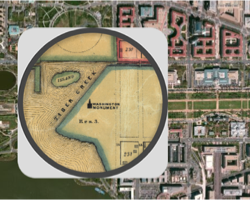
Interactive maps compare current cities to 19th century versions

dc-spyglass-viewI love the Smithsonian magazine. Both the print and online versions. The articles are incredibly cool and range all over the place, from why we incorrectly believe that carrots help us see better to what people snacked on during the 1963 March on Washington.

During a recent run through their online history articles, I ran across a very cool interactive activity that lets you look at past and present maps of six major US cities. The magazine recently dipped into David Rumsey‘s collection of over 150,000 maps to find some of the best representations of American cities over the past couple hundred years. With some simple programming, they were able to overlay images of vintage maps of some major cities onto satellite images from today. Continue reading Interactive maps compare current cities to 19th century versions →

Analysis worksheets, evidence, and primary documents

loc analysis worksheetThere’s a cool buzz running through the history education world.

Primary sources. Documents. Using evidence. Solving problems. Historical thinking. And that’s a good thing. But I know that it can be difficult sometimes trying to figure out how to use primary sources.

First piece of advice?

Don’t worry so much about primary vs. secondary sources. Start thinking about evidence, about data, instead of focusing just on one sort of document over another. Because if we’re asking great questions, kids will be using all sorts of documents and sources to solve the problem.

Second piece of advice?

Don’t re-invent the wheel. Have kids use the different tools already out there as they work to make sense of documents. As we train our kids to think historically, these sorts of analysis worksheets can be great scaffolding tools, especially with  elementary and middle school students.

Some of the best Continue reading Analysis worksheets, evidence, and primary documents →