This week’s post comes from Angela Howdeshell: I work as the Vice President for Programs and Administration for the Kansas Council for Economic Education, a non-profit organization housed at Wichita State University with a mission of helping Kansas K-12 schools integrate financial literacy and economic education.
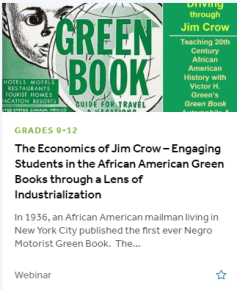 Engage your students by integrating economics into your social studies classes! Any kindergarten teacher all the way to a high school history teachers is bound to find many places were economics can easily be expanded to add great value. The Council for Economic Education has simplified job by giving you the background and the lessons & activities. Take a few minutes this week to start reviewing the many free online lessons and professional development opportunities that have recently been added to www.EconEdLink.org. There is something for everyone and the new website features allow you to search by grade level, topic, subject, keyword and more! Be sure to join for free and you can save your favorites and receive updates on new opportunities for training.
Below is just a few examples of what you’ll find for pre-recorded webinars:


 This week’s poster is our very own KCSS President, Thomas Fulbright: I have been teaching history at Hope Street Academy, a public charter school, in Topeka since 2008. My wife and I have three daughters, Claire, Nora, and Meredith. I intend to spend my entire life convincing them how exciting and important history is! My bio picture is of Claire and I meeting President Lincoln!
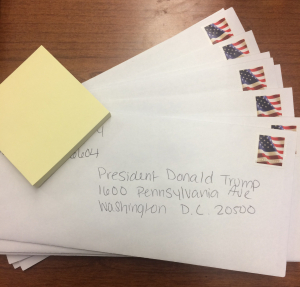 In my last post I discussed teaching history through the use of a simulation of Congress. I gave students a bill from the past, then had them “cast a vote” on the bill by writing an argumentative essay using evidence from the time period (speeches delivered in Congress, newspaper articles, editorial cartoons, etc.) to justify their “vote”. The last part of the process was I had students make a “Contemporary Connection” by reading an NPR article about a similar policy debate being had today in Washington. Students then had to decide if they support or oppose today’s policy. Lastly, they then had to make a comparison to their opinion on the past policy debate with their opinion on the policy debate today. For example; students would have to account for why they had “voted” in favor of H.R.5804 (which became the “Chinese Exclusion Act”), but were then opposed to restrictive immigration policies today?