Category Archives: historical thinking

15 econ lessons, political cartoons, and PD designed to make you and your kids smarter

This week’s guest post is written by Angela Howdeshell, Vice President for Programs and Administration for the Kansas Council for Economic Education.

———-

The current political tension has created many “teachable moments” for helping students understand many of the economic issues facing our nation. These issues are not always taught in classrooms but this is a great time to help students clarify their own thinking and ultimately, become more informed citizens and future voters. The issues are very complex and require our students to begin to dig into these topics in order to understand not only the challenges faced and the impact of choices made in the past, but also to understand the challenges our nation faces today and the impact of the choices we make now.

2015-econedlinklogoIntegrating economic and personal finance concepts in K-12 classrooms is necessary to Continue reading 15 econ lessons, political cartoons, and PD designed to make you and your kids smarter →
“The Anti-Washington”: Using Art as a Historical Tool in World History Class

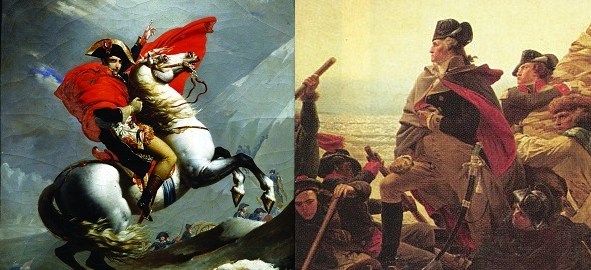
I believe that a key aspect of “doing” social studies is to give kids the opportunity to not only connect prior knowledge to the content being studied, but also allow them the chance to reevaluate their opinion of historical figures using new knowledge that is presented.  Teaching high school world history normally involves introducing students to a wide range of individuals, concepts and events.  Trying to help students achieve some level of mastery of these concepts can seem daunting, especially if you are not able to tap into that reservoir of knowledge that the kids bring with them into the room.  In teaching the French Revolution and its aftermath I attempt to achieve this by bringing in the single historical figure in which kids are the most familiar: George Washington.  In the process I also give the students a chance to flex their non-text discipline specific literacy muscles by analyzing two pieces of art work that say an awful lot about the subjects of depicted in each.

Continue reading “The Anti-Washington”: Using Art as a Historical Tool in World History Class →

MBQs – Using Media Based Questions to support historical thinking

reece-1I was having a conversation with my two twenty-something children a few weeks ago and referenced an old Reese’s Peanut Butter Cup commercial. You know the one.

The one where two people, one eating peanut butter and the other chocolate, bump into each other? The one where they’re both heading headphones, listening to their Sony Walkmans, and don’t see each other until it’s too late.

“Hey! You got peanut butter on my chocolate.” “Hey! You got chocolate in my peanut butter.”

Yeah. My kids obviously didn’t remember either. It’s an ancient ad but I think of it often when we’re talking about app mashups and tweaking tech tools to do things they’re not really designed to do. Cause chocolate and peanut butter is as delicious together as is iMovie and Tellagami.

I shared the Reece’s reference with my kids because earlier in the day I had spent some time talking Google tools with a group of tech integration coaches. Part of that time was spent exploring the possibilities of mashing up Google My Maps and Forms. And over the last few days, my brain has been going back to different things that we could be doing with Google Forms.

So.

I love document based questions. I love the Stanford History Education Group’s Beyond the Bubble mini-assessment tool. And we know that I love the Google.

The mashup? Continue reading MBQs – Using Media Based Questions to support historical thinking →

Russel Tarr & A History Teaching Toolbox

(Cross-posted from History Tech.)

Part of what I get to do is spend time browsing the Interwebs finding tools and resources that would be useful for history and social studies teachers. Sometimes I find new stuff like the very cool Smithsonian Learning Labs and sometimes I just keep going back to the classics.

Russel Tarr is one of the classics. His Active History site (along with his ClassTools and Tarr’s Toolbox) always has some new strategy or tool that I haven’t seen and it’s always something useful. I’m really not sure how he finds time to actually teach but he’s been doing this for almost twenty years.

He has a degree in Modern World History from Lady Margaret Hall, Oxford University and is currently Head of History at the International School of Toulouse, France. On his free time, he delivers training courses to history teachers in the UK and Europe, writes regularly for the national and international press on historical and educational issues, and is a prominent figure in the educational community on Twitter – where he is one the most followed history teachers in the world.

All of this to say that he knows what he’s talking about. And it just got better. Continue reading Russel Tarr & A History Teaching Toolbox →

H.I.T. Notebooks: A Different take on Interactive Notebooks

jill weberJill Weber, 2016 Gilder Lehrman Kansas History Teacher of the Year, has joined the Doing Social Studies writing team and will be posting throughout the year. The following is a cross-post from her excellent site A View of the Web.


I used Interactive Notebooks in my social studies class for eight years.  The majority of the students loved them.  But I had a serious love/hate relationship with them.  And after taking a long look at the pros and cons of the books and my current curriculum, I decided not to continue with the interactive notebooks last year.

While I found it a relief not having to keep up with the grading of 60+ notebooks, there was something missing from my class.  I had a number of kids ask me why we weren’t doing them anymore, and others who were disappointed that the “hands on” cutting, pasting, and creativity was replaced with more writing assignments.  I felt guilty that my answer was “because I just couldn’t keep up with all the grading.”

That got me thinking on ways that I could bring the interactive notebooks idea back without having all the copious grading that went with it.  I talked with our language arts teacher, who uses her interactive notebooks as a tool to help organize materials and doesn’t grade it at all.  I liked that idea.

But I wanted more.  I wanted a way to hold kids accountable.  I wanted them to take pride in the organization and appearance of the book.  And, most of all, I wanted it to be used as something more than a storage device.  I want it to be something they will reference throughout the year.

The Idea:
Then an idea started to take form.  An idea to use the notebook more like a detective’s note book when trying to solve a crime.

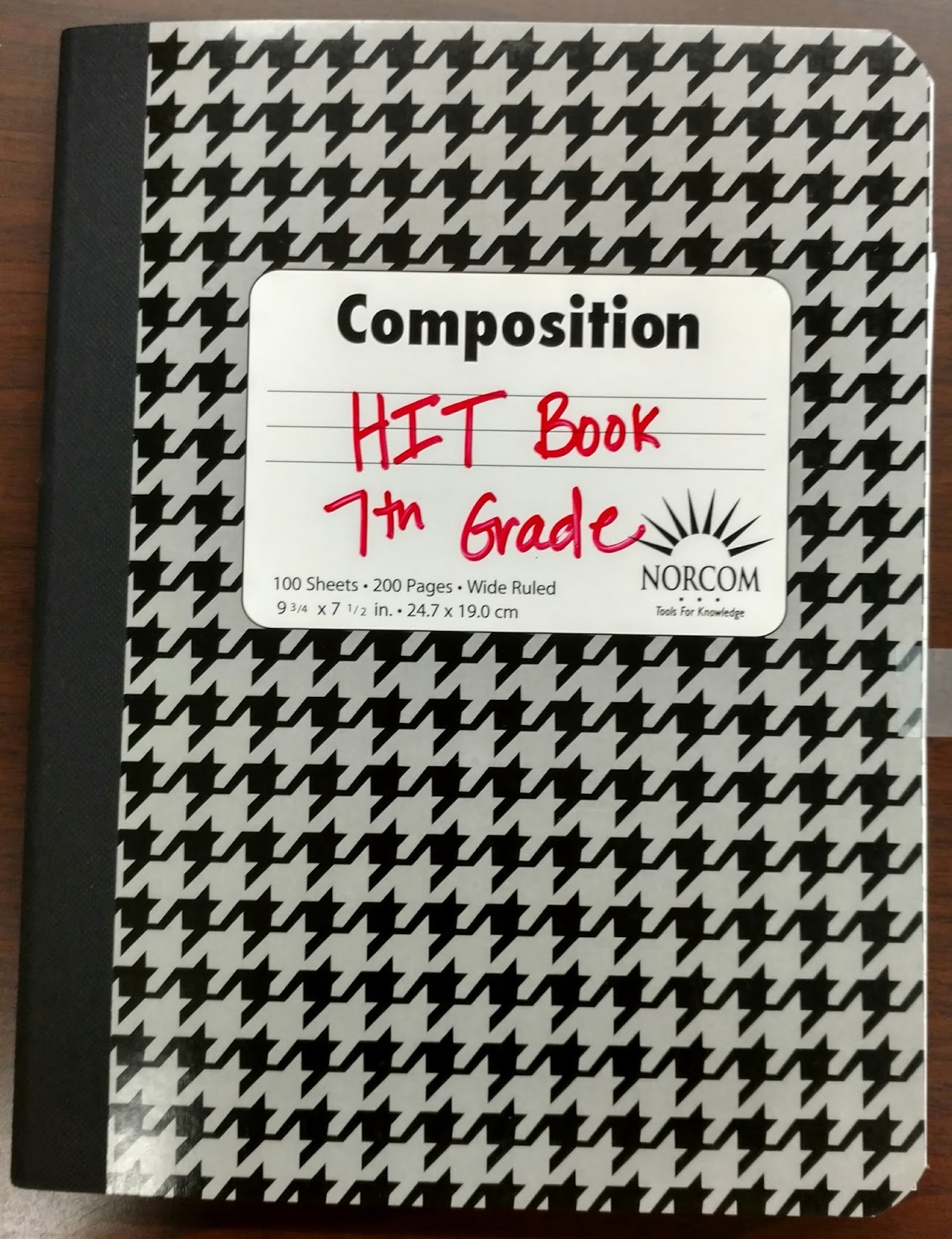
So this year, we have: the  Historian In Training Notebook or HIT books. (HIT is a cool name for a middle school activity, right? )

The HIT notebook will be designed as sort of a history detective notebook that we’ll use to identify historical thinking techniques, analyze primary sources, keep information over specific historical questions, and refer back to skills learned throughout the year.

A few examples of possible pages  . . .  Continue reading H.I.T. Notebooks: A Different take on Interactive Notebooks →