Category Archives: lesson plans

Black History 365

Cross-post by Glenn Wiebe from his site, History Tech.

———

The beauty of studying history is that you can never learn it all. There’s always something new to discover. A fresh piece of evidence. Another interpretation. A person or event or idea that has always been there . . . just waiting to be uncovered.

Maybe it’s a small discovery that changes how you personally understand the world. This week I learned that Paul Revere was an amateur dentist. (And if you’re like me, there’s now an image in your head of Revere on a horse – “The cavities are coming! The cavities are coming!”)

Not earth-shattering. But still cool.
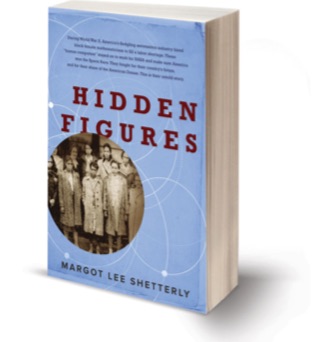
hiddenfigures2And then there are those people and events that are just a bit bigger and should change how we all see the world. The movie and book Hidden Figures are like that.

Seriously? How did that slip by?

African American women calculating aeronautical and astronomical math, helping push the United States into space? In the Jim Crow South? Now that’s cool. And powerful. And part of the American story. But up until the last few years, the story of people like Katherine G. Johnson, Dorothy Vaughan, and Mary Jackson was relatively unknown and certainly not mentioned in any of the history classes I ever took.

Which brings us to February.

And Black History Month.

I’m always a bit conflicted about the idea. The concept of a month specifically set aside for the study of Black History started back in 1926 when historian Carter G. Woodson and the Association for the Study of Negro Life and History announced the second week of February to be “Negro History Week.” That particular week was chosen because it marked the birthday of both Abraham Lincoln and Frederick Douglass.

In 1976, the federal government followed the lead of the Black United Students at Kent State and established the entire month as Black History Month. President Ford urged Americans, and especially teachers and schools, to “seize the opportunity to honor the too-often neglected accomplishments of black Americans in every area of endeavor throughout our history.”

The hope was that Black History Month would provide a very intentional time for all of us to remember together the struggles of African Americans to obtain the basic civil rights afforded to others, the challenges African Americans have faced for centuries, and the contributions of African Americans to who we are. But . . . the real hope was Continue reading Black History 365 →

Zoom In to history

jill weberJill Weber, 2016 Gilder Lehrman Kansas History Teacher of the Year and teacher at Cheney Middle School, joined the Doing Social Studies writing team last year. The following is a cross-post from her site A View of the Web.

——–

About 3 years ago I was first introduced to a new web program called Zoom In.  They were financed by the Bill and Linda Gates Foundation and were trying to create an online platform to help students use historical thinking skills, and help teachers learn how to best instruct these skills.  Because, let’s face it.  Most of us were NOT taught this way, and most of us were not instructed on HOW to teach this way.

For me it was love at first sight.

And then I got the bad news.  The program wasn’t completely iPad friendly, and we are 1:1 iPads.

But I was too much in love with this idea to just let it go.  So I did what I do best . . . Continue reading Zoom In to history →

Interact sims and lesson plans get two thumbs up

Today’s guest is Megan Neiman, a high school social studies teacher at McPherson High School in McPherson, Kansas and the current secretary for the Kansas Council for the Social Studies.

———-

You know those big orange SOCIAL STUDIES SCHOOL SERVICE catalogs that social studies teachers around the country receive a few times a year? The ones that we always thumb through and think “oh, that looks nice,” and “that looks like an interesting video!”

You know the ones I’m talking about. Well, I actually tried something from it! The curriculum is called Interact and I’ve had some wonderful experiences over the past few years implementing it in my classrooms.

What is Interact?

Interact is a curriculum designed to let students learn through experiences. It’s written by teachers for teachers and closely follows the old proverb, “Tell me and I’ll forget; show me and I may remember; involve me and I’ll understand.” In a series of different units, students compete in challenges, follow simulations, and participate in assessments that help them develop skills across the curriculum and enhance the use of cooperative learning.

Each unit comes in a different book and contains anywhere from three to 20 class periods of activities. Interact supplements learning so students actually remember content because they are involved in their learning. Each book contains a teacher’s guide, purpose and overview, daily lesson plans, student materials, time management guidelines, and support materials. Interact activities require students to analyze tasks and evaluate how to apply their knowledge to create the assigned product. Most units also have activities that can be enhanced by participation from parents, administrators, or community members. This is great for promoting civic engagement and a connection to the community.

How do I use it in the classroom?

Continue reading Interact sims and lesson plans get two thumbs up →

Graphic Content: Using Visual Communication in the Social Studies Classroom

imgresOne of my favorite ways to present information to students is through the use of infographics because they are visually appealing and easy to read, even though they can contain a wealth of information.  In the past I have been a huge proponent of not recreating the wheel when it came to infographics because it is so easy to search for a topic and find something that has already been created and can easily be used in the classroom.  That was until I was introduced to Piktochart, the easy-to-use infographics creator. Continue reading Graphic Content: Using Visual Communication in the Social Studies Classroom →
“The Anti-Washington”: Using Art as a Historical Tool in World History Class

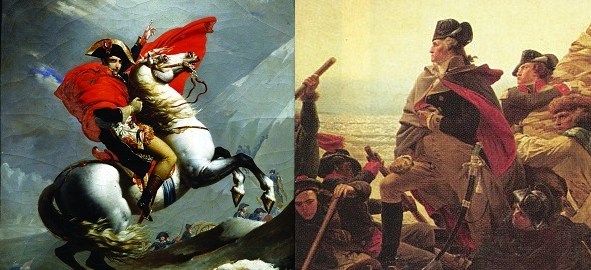
I believe that a key aspect of “doing” social studies is to give kids the opportunity to not only connect prior knowledge to the content being studied, but also allow them the chance to reevaluate their opinion of historical figures using new knowledge that is presented.  Teaching high school world history normally involves introducing students to a wide range of individuals, concepts and events.  Trying to help students achieve some level of mastery of these concepts can seem daunting, especially if you are not able to tap into that reservoir of knowledge that the kids bring with them into the room.  In teaching the French Revolution and its aftermath I attempt to achieve this by bringing in the single historical figure in which kids are the most familiar: George Washington.  In the process I also give the students a chance to flex their non-text discipline specific literacy muscles by analyzing two pieces of art work that say an awful lot about the subjects of depicted in each.

Continue reading “The Anti-Washington”: Using Art as a Historical Tool in World History Class →