Category Archives: primary sources

15 econ lessons, political cartoons, and PD designed to make you and your kids smarter

This week’s guest post is written by Angela Howdeshell, Vice President for Programs and Administration for the Kansas Council for Economic Education.

———-

The current political tension has created many “teachable moments” for helping students understand many of the economic issues facing our nation. These issues are not always taught in classrooms but this is a great time to help students clarify their own thinking and ultimately, become more informed citizens and future voters. The issues are very complex and require our students to begin to dig into these topics in order to understand not only the challenges faced and the impact of choices made in the past, but also to understand the challenges our nation faces today and the impact of the choices we make now.

2015-econedlinklogoIntegrating economic and personal finance concepts in K-12 classrooms is necessary to Continue reading 15 econ lessons, political cartoons, and PD designed to make you and your kids smarter →
Student Action: The Power Students Have To Make Change

Students around the nation are talking about the presidential election. I remember my middle school and high school days watching presidential elections and feeling a need to take part in some way, shape, or form. It was fun to have mock elections but I knew that those votes just stayed in the classroom and would not affect the actual vote tally. I would go home those nights watching the local news seeing the individual votes go up and up and up as the polls closed but knowing none of those votes were mine.

It made me feel powerless.

No matter who your students supported, many of them will feel that same powerlessness and want to take some form of action. As history educators, we can use examples of Continue reading Student Action: The Power Students Have To Make Change →

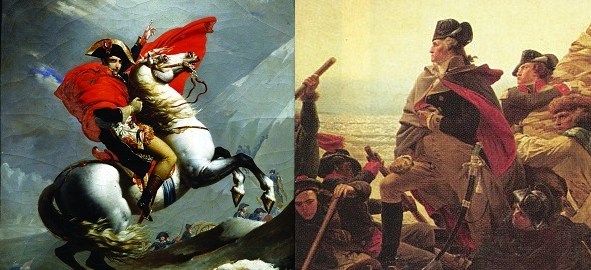
“The Anti-Washington”: Using Art as a Historical Tool in World History Class

I believe that a key aspect of “doing” social studies is to give kids the opportunity to not only connect prior knowledge to the content being studied, but also allow them the chance to reevaluate their opinion of historical figures using new knowledge that is presented.  Teaching high school world history normally involves introducing students to a wide range of individuals, concepts and events.  Trying to help students achieve some level of mastery of these concepts can seem daunting, especially if you are not able to tap into that reservoir of knowledge that the kids bring with them into the room.  In teaching the French Revolution and its aftermath I attempt to achieve this by bringing in the single historical figure in which kids are the most familiar: George Washington.  In the process I also give the students a chance to flex their non-text discipline specific literacy muscles by analyzing two pieces of art work that say an awful lot about the subjects of depicted in each.

Continue reading “The Anti-Washington”: Using Art as a Historical Tool in World History Class →

MBQs – Using Media Based Questions to support historical thinking

reece-1I was having a conversation with my two twenty-something children a few weeks ago and referenced an old Reese’s Peanut Butter Cup commercial. You know the one.

The one where two people, one eating peanut butter and the other chocolate, bump into each other? The one where they’re both heading headphones, listening to their Sony Walkmans, and don’t see each other until it’s too late.

“Hey! You got peanut butter on my chocolate.” “Hey! You got chocolate in my peanut butter.”

Yeah. My kids obviously didn’t remember either. It’s an ancient ad but I think of it often when we’re talking about app mashups and tweaking tech tools to do things they’re not really designed to do. Cause chocolate and peanut butter is as delicious together as is iMovie and Tellagami.

I shared the Reece’s reference with my kids because earlier in the day I had spent some time talking Google tools with a group of tech integration coaches. Part of that time was spent exploring the possibilities of mashing up Google My Maps and Forms. And over the last few days, my brain has been going back to different things that we could be doing with Google Forms.

So.

I love document based questions. I love the Stanford History Education Group’s Beyond the Bubble mini-assessment tool. And we know that I love the Google.

The mashup? Continue reading MBQs – Using Media Based Questions to support historical thinking →

Professional Growth and Development: The Monticello Teacher Institute

Joe Zlatnik is an 8th Grade American History teacher at Basehor-Lindwood USD 458.

monticello_2010-10-29

“I am as happy no where else and in no other society,” Thomas Jefferson once wrote, “and all my wishes end, where I hope my days will end, at Monticello.”

Professional development opportunities, when relegated to our buildings, is often dull, not specific to our content, and, worst of all, uninspiring. Fortunately, there are a number of quality professional development opportunities for Social Studies teachers that will significantly impact us as educators. Coming up in November is the Kansas Council for the Social Studies Conference in Salina. The next month, the National Council for the Social Studies will have their annual conference in Washington D.C. While both of these are great opportunities to learn from some of the brightest minds in our profession, there are other professional development opportunities that are impactful on a more personal level.

This past July, I had the honor and privilege of being selected to take part in the Monticello Teacher Institute: The Barrringer Fellowship. This weeklong experience allowed me to spend time in Charlottesville, Virginia immersing myself in the world of Thomas Jefferson. We spent time at Monticello itself, the special collections library at the University of Virginia, the Robert H. Smith International Center for Jefferson Studies, and a multitude of locations significant to Jefferson’s life or the study of his life. Continue reading Professional Growth and Development: The Monticello Teacher Institute →