 Happy Monday! Anyone have a countdown to the end of school? As we near the final stretch of another crazy school year we once again face the challenge of keeping kids excited and engaged. I thought I would share something that I discussed at the end of last school year to give you a couple of ideas to keep those creative juices flowing.
So, it’s April . . . track meets, warm weather, field trips, crazy schedules, finals, and we’re supposed to keep kids engaged? Maybe one of the greatest challenges in education is the end of the year. How do we find creative ways to keep kids interested in learning?
One popular survival mechanism is plugging in a movie that is connected to your curriculum. Do you really think the kids will find it much fun to watch Gettysburg and complete a worksheet connected to the movie? Sometimes we are required to give a semester final but to ask the kids to take a long drawn out test that you may not be interested in grading when the school year is done lacks a lot of appeal. Frankly, the last month of a school year can be a real struggle and make you feel like our friend pictured above, but it doesn’t have to be that way. You just need to inject a little creativity into your year-end routine.
So as we get near the end of the year, try one of these game changers: Continue reading It’s the most troublesome time of the year . . . engaging kids at the end

 One of the new initiatives in my school district during the 18-19 school year has been to begin a Project Based Learning community. This is a group of teachers who came in over the summer for two full days of training, and have continued to meet quarterly during the school year to learn about PBL together and support each other as they implement PBL in their own classrooms.
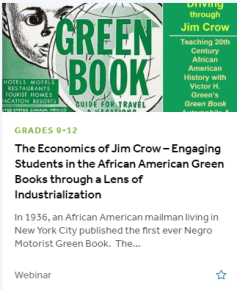 Engage your students by integrating economics into your social studies classes! Any kindergarten teacher all the way to a high school history teachers is bound to find many places were economics can easily be expanded to add great value. The Council for Economic Education has simplified job by giving you the background and the lessons & activities. Take a few minutes this week to start reviewing the many free online lessons and professional development opportunities that have recently been added to


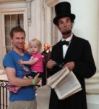 This week’s poster is our very own KCSS President, Thomas Fulbright: I have been teaching history at Hope Street Academy, a public charter school, in Topeka since 2008. My wife and I have three daughters, Claire, Nora, and Meredith. I intend to spend my entire life convincing them how exciting and important history is! My bio picture is of Claire and I meeting President Lincoln!
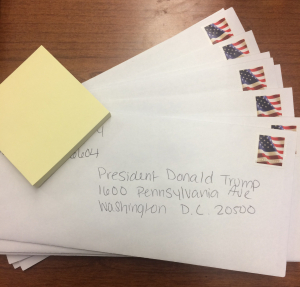 In my last post I discussed teaching history through the use of a simulation of Congress. I gave students a bill from the past, then had them “cast a vote” on the bill by writing an argumentative essay using evidence from the time period (speeches delivered in Congress, newspaper articles, editorial cartoons, etc.) to justify their “vote”. The last part of the process was I had students make a “Contemporary Connection” by reading an NPR article about a similar policy debate being had today in Washington. Students then had to decide if they support or oppose today’s policy. Lastly, they then had to make a comparison to their opinion on the past policy debate with their opinion on the policy debate today. For example; students would have to account for why they had “voted” in favor of H.R.5804 (which became the “Chinese Exclusion Act”), but were then opposed to restrictive immigration policies today?
