Tag Archives: best practice

A Guide to a New Type of Test

I got to know Jill Weber about five years ago when we started our second Teaching American History grant at ESSDACK. And she’s been great about opening up her classroom in a variety of ways including posting ideas and strategies on her blog A View of the Web.

Jill recently shared a post with our study group that she is allowing us to cross-post. Enjoy!

glennw

—————————-

My 7th graders will be taking their first test for me this week.  I thought this would be a good time to talk about what a Social Studies test in Mrs. Weber’s class looks like.

Social Studies has changed.  Teachers should be implementing activities, lessons, and strategies to help students read and analyze primary sources, think critically, and “do” history.  We should be teaching kids how to become historians.  How to question sources, look at conflicting view points, and draw conclusions based on the evidence that is given to us.

But what does that LOOK LIKE?

And what does it look like on a TEST?

I have spent the last three years developing a method for creating unit tests/assessments that involve more analysis and application as opposed to simple regurgitation of facts.

Here’s a taste of what you will and won’t see on one of my tests. 
Continue reading A Guide to a New Type of Test →
Reading as professional development and capitalism vs. democracy

Welcome to Scott Peavey, high school US and World history teacher at Gardner Edgerton. Scott will be writing regular posts as the newest KCSS board member.

——

As social studies teachers we constantly are finding little tidbits of information in our everyday “civilian” lives that create that special spark.  I consider that spark to be the feeling of creativity and insight that educators get whenever they identify an opportunity to cultivate a teachable moment in their classroom.  The source materials for these sparks are diverse; anything from reading the news to watching my one-year old son race across the living room floor.  Over the last week I felt that spark as I was undergoing the most cost-efficient social studies professional development there is . . . reading.

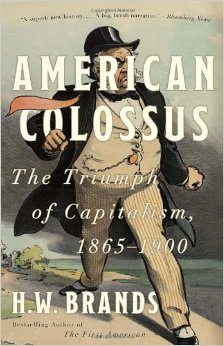
triumphI recently began H.W. Brand’s book American Colossus: The Triumph of Capitalism 1865-1900.  Last school year was my first formally teaching 11th grade US History and I quickly found that the Gilded Age and the rise of the industrialists was a weak point in my content arsenal.  My goal in reading this book Continue reading Reading as professional development and capitalism vs. democracy →

Pre-Service Teachers Contribute Curriculum

Pre-Service teachers are getting into the game and classroom teachers can benefit. The HGSS undergraduates at KU have a thriving student chapter of the National Council for the Social Studies  – the Kansas University Council for the Social Studies (KUCSS) – and they’ve been using their powers for good.

KUCSS has partnered with the Robert J. Dole Institute of Politics in Lawrence, Kansas to create instructional materials for middle and high school social studies teachers. The Dole Institute of Politics has launched an online exhibit commemorating Dole and his service in WWII which resulted in a debilitating injury that would later largely shape his work as a Senator resulting in the Americans with Disabilities Act (1995).

If you’d like to read more about the collection and their collaboration with KUCSS you can check out the full article here.

Make sure to check out the WWII Letter Collection from the Dole Institute and follow the In the Classroom link for the lesson plan.

And if you haven’t taken the opportunity to visit the Dole Institute of Politics in Lawrence it’s well worth a trip. Heck, make an I-70 road trip of it: start at the Eisenhower Presidential Center in Abilene, hit the Dole Institute, and then on to Liberty, Missouri for the Truman Presidential Library and Museum – just imagine all the government fun!

7 triggers that guarantee student engagement

fascinate1Okay . . . guarantee is a strong word.

Encourage might be better, maybe stimulate. Jump start?

But it doesn’t really matter what word we decide on.

I think using some of the ideas that Sally Hogshead pushes can help increase the chances for grabbing and keeping the attention of our kids.

Sally wrote a book called Fascinate: Your 7 Triggers to Persuasion and Captivation that came out several years ago. What she talks about in the book are the powerful strategies that are used to influence thinking and decision making. Fascinate is targeted at marketers and ad folks but the ideas seem to be exactly what stressed-out teachers are looking for.

Economists have always said that to get people to do something, you have to provide incentives.

So . . . imagine a middle school teacher trying to elicit engagement and excitement about the Compromise of 1850 with 13 year-olds. What to do? Sally has some suggestions . . . seven to be exact. She calls them triggers. A trigger is “a deeply-rooted means of arousing intense interest.”

Sally says it just a matter of picking, choosing and combining the right triggers and your kids will be eating out of your hand.

So what do these triggers look like? Continue reading 7 triggers that guarantee student engagement →

10 things you can do this week that will make you a better social studies teacher

Best PracticeOver the last few months, I’ve been working with a variety of different teacher groups in a variety of different places. But all of the conversations have somehow shifted back to the same basic compelling question:

What does an effective teacher look like?

It’s a great question to ask. We’ve always paid lip service to professional development and learning but it seems as if only recently has the question been taken seriously. The Common Core literacy standards for history and the newly revised Kansas history/government standards are demanding more from our kids – and from us.

So I started thinking about things we can do to get better as social studies teachers. Not stuff organized by our administrators. Informal sorts of things that can make us more effective. I came up with ten. There’s gotta be more.

What would you add? Subtract from the list? Continue reading 10 things you can do this week that will make you a better social studies teacher →