Category Archives: primary sources

4 reasons for not using primary sources (And 27 strategies for eliminating those reasons)

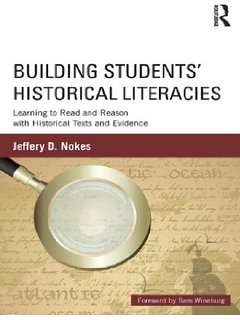
nokes book

I’ve cross-posted this article from History Tech because the article discussed below is just that useful. So . . . if you’ve already seen this, head back to the article and keep reading!

——–

As the discipline continues to shift its practice towards asking kids to solve problems using evidence and encouraging the development of historical thinking skills, more and more social studies teachers are integrating the use of primary sources into their instructional designs. Several days ago, I posted a quick overview that highlighted 10 things to think about while using primary sources.

And if you’ve been reading History Tech for any amount of time, you know that I love the use of evidence – especially the use of primary sources.

But what if we’re wrong?

What if using primary sources is so difficult that many of our students just aren’t able to do it? Could we just be wasting a bunch of time that would be better used with direct instruction? Continue reading 4 reasons for not using primary sources (And 27 strategies for eliminating those reasons) →

Stop! In the Name of…Writing?

stoplight2In an effort to improve the writing skills of my students and better prepare them for the Kansas Writing Assessment, the Multidisciplinary Performance Task, I have begun implementing the Stoplight Writing strategy.  I attempted to use this strategy in my classroom last year, but as a last ditch effort before the test rather than a regular activity the students experienced throughout the entire school year.

This year however, my students are writing every unit using stoplight writing, and the dramatic difference in the finished products from last year to this year are extraordinary.  Last year I feared that my 7th grade students didn’t know how to write a complete sentence, this year I am finding that my expectations for the students are too low and every unit I raise the standards for their finished work. Continue reading Stop! In the Name of…Writing? →

A Guide to a New Type of Test

I got to know Jill Weber about five years ago when we started our second Teaching American History grant at ESSDACK. And she’s been great about opening up her classroom in a variety of ways including posting ideas and strategies on her blog A View of the Web.

Jill recently shared a post with our study group that she is allowing us to cross-post. Enjoy!

glennw

—————————-

My 7th graders will be taking their first test for me this week.  I thought this would be a good time to talk about what a Social Studies test in Mrs. Weber’s class looks like.

Social Studies has changed.  Teachers should be implementing activities, lessons, and strategies to help students read and analyze primary sources, think critically, and “do” history.  We should be teaching kids how to become historians.  How to question sources, look at conflicting view points, and draw conclusions based on the evidence that is given to us.

But what does that LOOK LIKE?

And what does it look like on a TEST?

I have spent the last three years developing a method for creating unit tests/assessments that involve more analysis and application as opposed to simple regurgitation of facts.

Here’s a taste of what you will and won’t see on one of my tests. 
Continue reading A Guide to a New Type of Test →

Pre-Service Teachers Contribute Curriculum

Pre-Service teachers are getting into the game and classroom teachers can benefit. The HGSS undergraduates at KU have a thriving student chapter of the National Council for the Social Studies  – the Kansas University Council for the Social Studies (KUCSS) – and they’ve been using their powers for good.

KUCSS has partnered with the Robert J. Dole Institute of Politics in Lawrence, Kansas to create instructional materials for middle and high school social studies teachers. The Dole Institute of Politics has launched an online exhibit commemorating Dole and his service in WWII which resulted in a debilitating injury that would later largely shape his work as a Senator resulting in the Americans with Disabilities Act (1995).

If you’d like to read more about the collection and their collaboration with KUCSS you can check out the full article here.

Make sure to check out the WWII Letter Collection from the Dole Institute and follow the In the Classroom link for the lesson plan.

And if you haven’t taken the opportunity to visit the Dole Institute of Politics in Lawrence it’s well worth a trip. Heck, make an I-70 road trip of it: start at the Eisenhower Presidential Center in Abilene, hit the Dole Institute, and then on to Liberty, Missouri for the Truman Presidential Library and Museum – just imagine all the government fun!

USGS historical topo maps

map explorer

Maps are so cool. Historical maps are way more cooler. And online historical maps are even way more cooler. (I like saying way more cooler cause it makes me feel like a rebel.)

A couple of months ago on the helpful GoogleMapsMania site, I ran across a way cool tool created by the United States Geological Survey. This is the group that, among other things, is responsible for creating topographic maps.

The cool tool that the USGS has created is called USGS Historical Topographic Map Explorer.

Basically, you do a map search with a Google Maps-like interface, click on a specific place on the resulting map, and the Historical Topographic Map Explorer will provide a timeline with topo maps from the past.

You can then select maps from Continue reading USGS historical topo maps →