An election year is like catnip for social studies teachers: our content in action, teachable moments galore . . . but then you get a race that’s unlike any in our lifetime. Granted, the United States has had elections as contentious before (in the 19th century, multiple times) but that doesn’t make this year’s election any easier to teach. Tonight we’ll all have front row seats as the candidates meet face to face in what promises to be an interesting debate. This also means that we’ve been getting lots of lists of election year resources, but what do they look like in practice? Here’s just a glimpse of what I’ve been doing in my 8th grade U.S. History classroom (but could definitely be used in multiple grade levels).
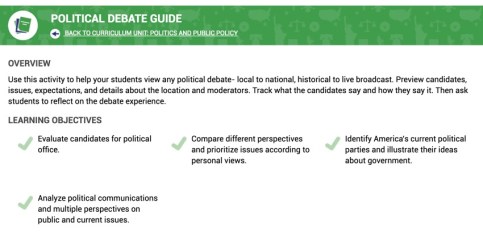 I’ll be sending my kids home with the kids home with iCivics’ Political Debate Guide this evening and there will be two more debates after tonight if you want to get your kids watching. Can I say how much help iCivics has been this year? It’s not just good for the games, I’ve been loving their Politics and Public Policy and Government and the Market units.
The Politics unit has lessons that break down a political process that can be confusing into understandable pieces and doesn’t leave out the media’s role. As focused as elections can be on the economy, lessons from the Market unit went along way to help me explain taxes and our federal budget. But the iCivics game Win The White House was hit after all the facts and figures. Just about all the kids got the correct answer for the number of electoral college votes required to win the presidency on my elections test.
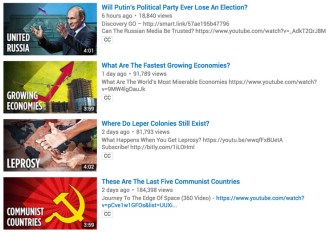 I also supplemented the above with Seeker Daily explainer videos on the candidates and parties. If you haven’t used Seeker Daily videos yet I highly recommend them. They’re all around three minutes long and explain matters both foreign and domestic – a great companion for CNN Student News. When CNN Student News has a story that I feel the students could use a little more background on, I go to Seeker and can usually find something that will clarify the issue. What is the difference between Sunni and Shiite Muslims? Got it. Why does Russia hate the United States? Yup. If you don’t use CNN Student News on a regular basis I would recommend them on Fridays. Beside all the regular election coverage they’ve had a series on Fridays focused on the election in general: electoral college, battleground states, history of televised debates…good stuff.
I hope this helped a little. We may not agree with everything the candidates are saying, but you can’t deny that they have the kids’ attention. We need to do what we can to capture this interest and hopefully create some engaged citizens in the process.